
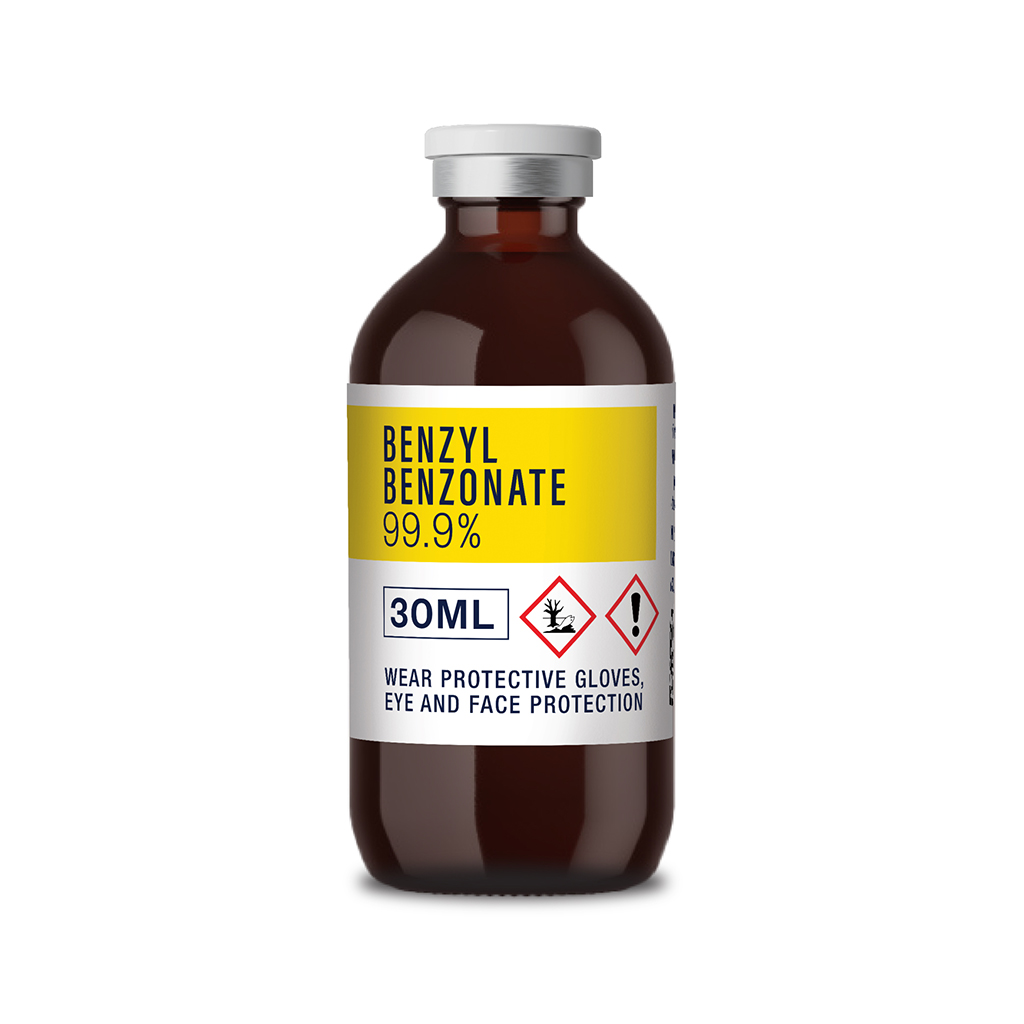
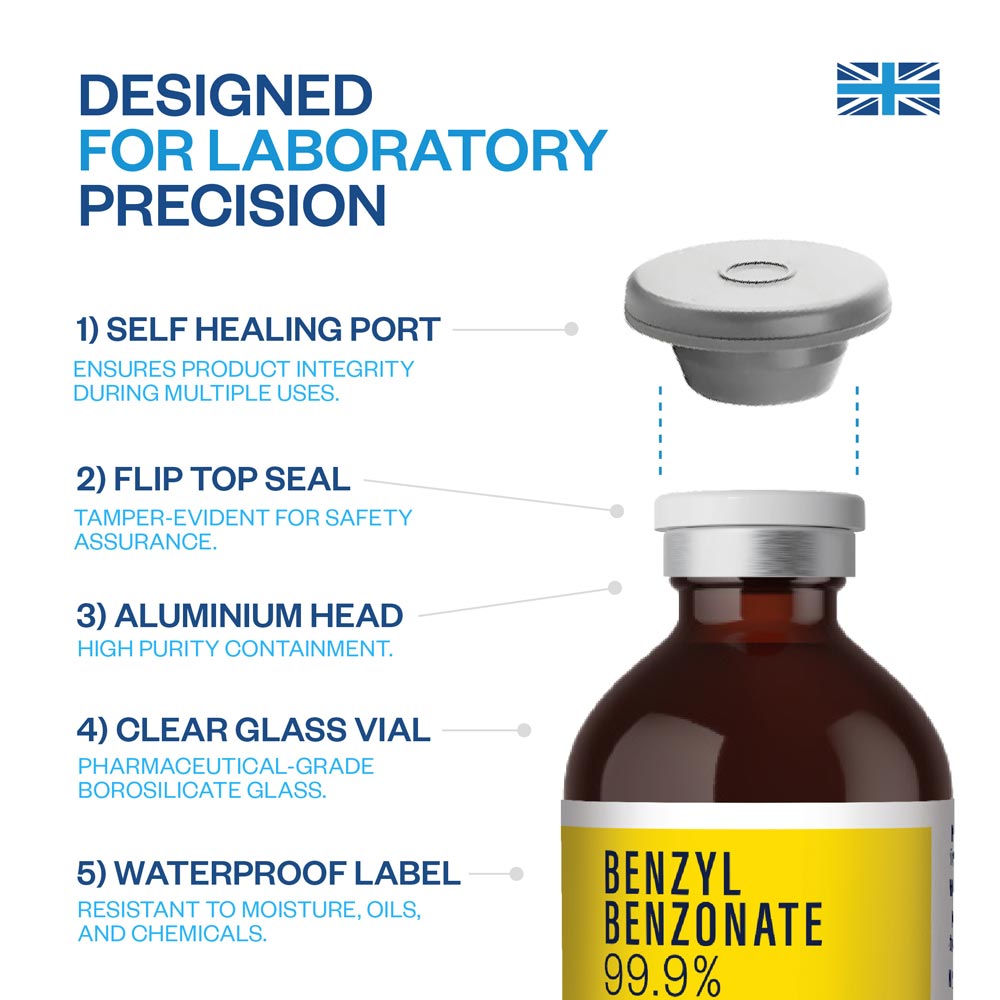
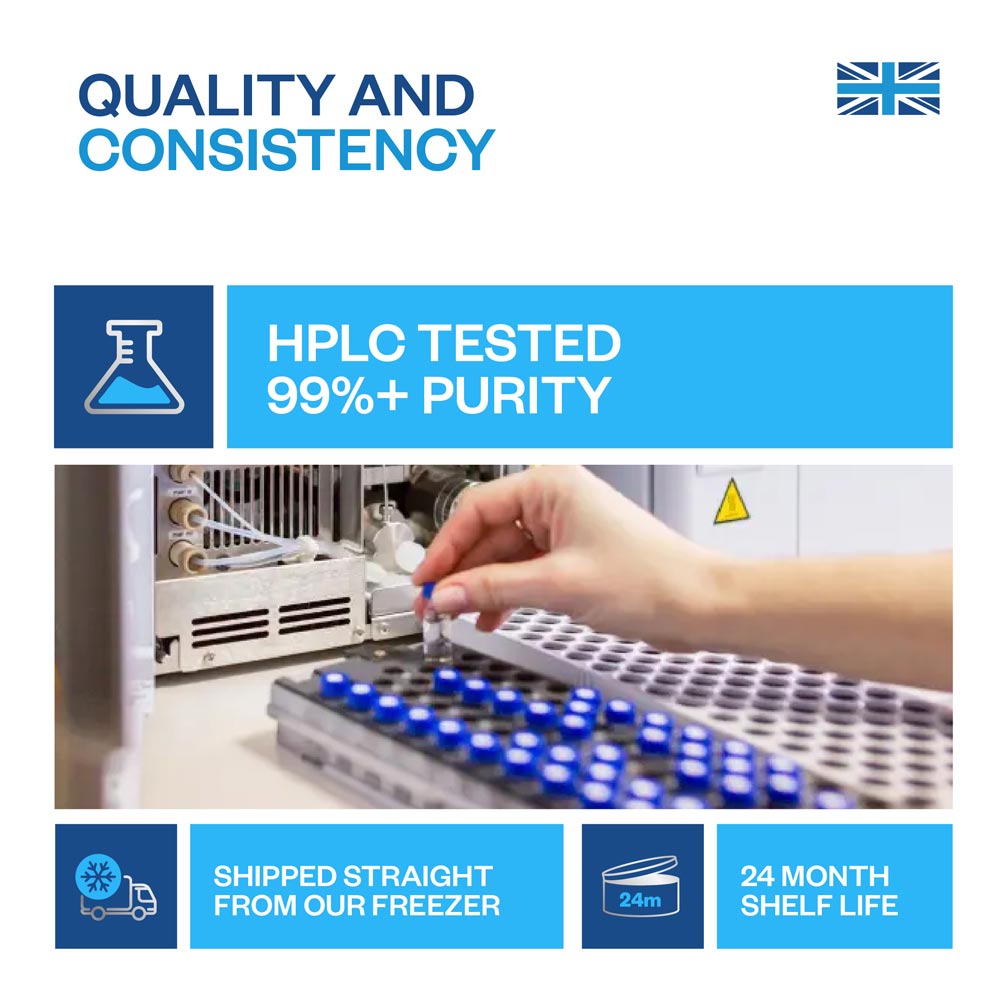
Benzyl Benzoate (with self-healing port, where applicable)
Important Notice: Please observe all safety information. The buyer assumes all responsibility for safety and for any use not in accordance with supplied directions and applicable regulations.
General Information
- Molecular Formula: C₁₄H₁₂O₂
- Chemical Name: Benzoic Acid Benzyl Ester
- CAS Number: 120-51-4
- EC Number: 204-402-9
- REACH Registration: 01-2119976371-33
Benzyl benzoate is the ester of benzyl alcohol and benzoic acid. It is typically supplied as a viscous liquid or solid flakes and has a weak, sweet, balsamic odour. It occurs naturally in a number of blossoms such as tuberose and hyacinth and is a constituent of Balsam of Peru and Tolu balsam.
Identification of the Substance
Product Name: Benzyl Benzoate
Product Code: BEBE
CAS No: 120-51-4
EC No: 204-402-9
REACH No: 01-2119976371-33
Synonyms: Benzoic Acid Benzyl Ester
Molecular Formula: C₁₄H₁₂O₂
Hazards Identification
- Classification (EC 1272/2008 – CLP):
- Classification (67/548/EEC): Xn; R22, N; R51/53
- Acute Toxicity (Oral), Category 4 — H302
- Hazardous to the Aquatic Environment (Chronic), Category 2 — H411

Signal Word: Warning
- Hazard Statements
- H302: Harmful if swallowed
- H411: Toxic to aquatic life with long-lasting effects
Precautionary Statements
- P264: Wash thoroughly after handling
- P270: Do not eat, drink or smoke when using this product
- P273: Avoid release to the environment
- P305 + P351 + P338: IF IN EYES: Rinse cautiously with water for several minutes. Remove contact lenses if present and easy to do. Continue rinsing
- P391: Collect spillage
- P501: Dispose of contents/container in accordance with regulations
Composition / Information on Ingredients
Substance: Benzyl Benzoate
Concentration: 100 %
Molecular Formula: C₁₄H₁₂O₂
CAS No: 120-51-4
EC No: 204-402-9
REACH No: 01-2119976371-33
Classification: H302, H411
First Aid Measures
- General: Consult a physician if unwell. Show this safety data sheet to medical personnel.
- Inhalation: Move person to fresh air and keep at rest. If breathing is difficult, administer oxygen. If not breathing, give artificial respiration and seek medical attention.
- Ingestion: Do not induce vomiting. Rinse mouth with water and drink plenty of water. Never give anything by mouth to an unconscious person. Seek medical attention if symptoms persist.
- Skin Contact: Wash immediately with plenty of water for at least 15 minutes. Remove contaminated clothing. Seek medical advice if irritation persists.
- Eye Contact: Rinse cautiously with water for at least 15 minutes while lifting eyelids. Seek medical attention if symptoms persist.
Most Important Symptoms
- Inhalation: Respiratory discomfort, shortness of breath
- Ingestion: Nausea, vomiting, diarrhoea, ataxia, convulsions
- Skin: Irritation
- Eyes: Irritation
Medical Attention Treat symptomatically.
- Firefighting Measures
- Suitable Extinguishing Media: Alcohol-resistant foam, dry powder, carbon dioxide, water spray
- Unsuitable Extinguishing Media: Water jet
Special Hazards: Thermal decomposition may release carbon monoxide and carbon dioxide. Product may be combustible at elevated temperatures.
Protective Equipment for Firefighters: Use self-contained breathing apparatus and full protective clothing.
Accidental Release Measures Personal Precautions: Wear suitable protective equipment. Ensure adequate ventilation. Avoid contact with skin and eyes. Remove sources of ignition.
Environmental Precautions: Avoid release into the environment. Prevent entry into sewers, surface water, groundwater, or soil.
Methods for Cleanup: Solid form: Collect using a shovel and place into a suitable waste container.
Liquid form: Absorb with inert material and collect for disposal.
Handling and Storage
- Handling: Handle in accordance with good industrial hygiene. Avoid inhalation of vapours or mist. Avoid contact with skin and eyes.
- Storage: Store in a cool, dry, well-ventilated area in tightly closed containers. Keep away from heat, light, oxidising agents, strong acids, and alkalis. Keep away from food and drink.
- Exposure Controls / Personal Protection
- Engineering Controls: Adequate ventilation, eyewash stations, safety showers.
- Personal Protective Equipment
- Eye Protection: Chemical safety goggles (EN 166)
- Gloves: Chemical-resistant gloves (EN 374)
- Clothing: Protective long-sleeved clothing
- Respiratory Protection: Use approved respirator if vapours or aerosols are present
Disposal Considerations
Dispose of contents and containers in accordance with local and national regulations. Do not release into the environment. Empty containers may retain residues and must not be reused.
Regulatory Information
Regulation (EC) No 1907/2006 (REACH)
Regulation (EC) No 1272/2008 (CLP)
References
Wikipedia. Benzyl benzoate — chemical identity, formula, properties, and uses.
https://en.wikipedia.org/wiki/Benzyl_benzoate
NIH PubChem. Benzyl benzoate (CID 2345).
https://pubchem.ncbi.nlm.nih.gov/compound/Benzyl-Benzoate
ECHA. Benzyl benzoate registration dossier (EC 204-402-9; CAS 120-51-4).
https://echa.europa.eu/et/registration-dossier/-/registered-dossier/13634
ChemicalBook. Benzyl benzoate (CAS 120-51-4) chemical and physical properties.
https://amp.chemicalbook.com/ChemicalProductProperty_EN_CB9152283.htm
The Good Scents Company. Benzyl benzoate — solvent and fragrance ingredient data.
https://www.thegoodscentscompany.com/data/rw1001672.html
Reviews
There are no reviews yet.