


- OP Labs formerly Oxford Peptides
- Batch manufactured to defined specification
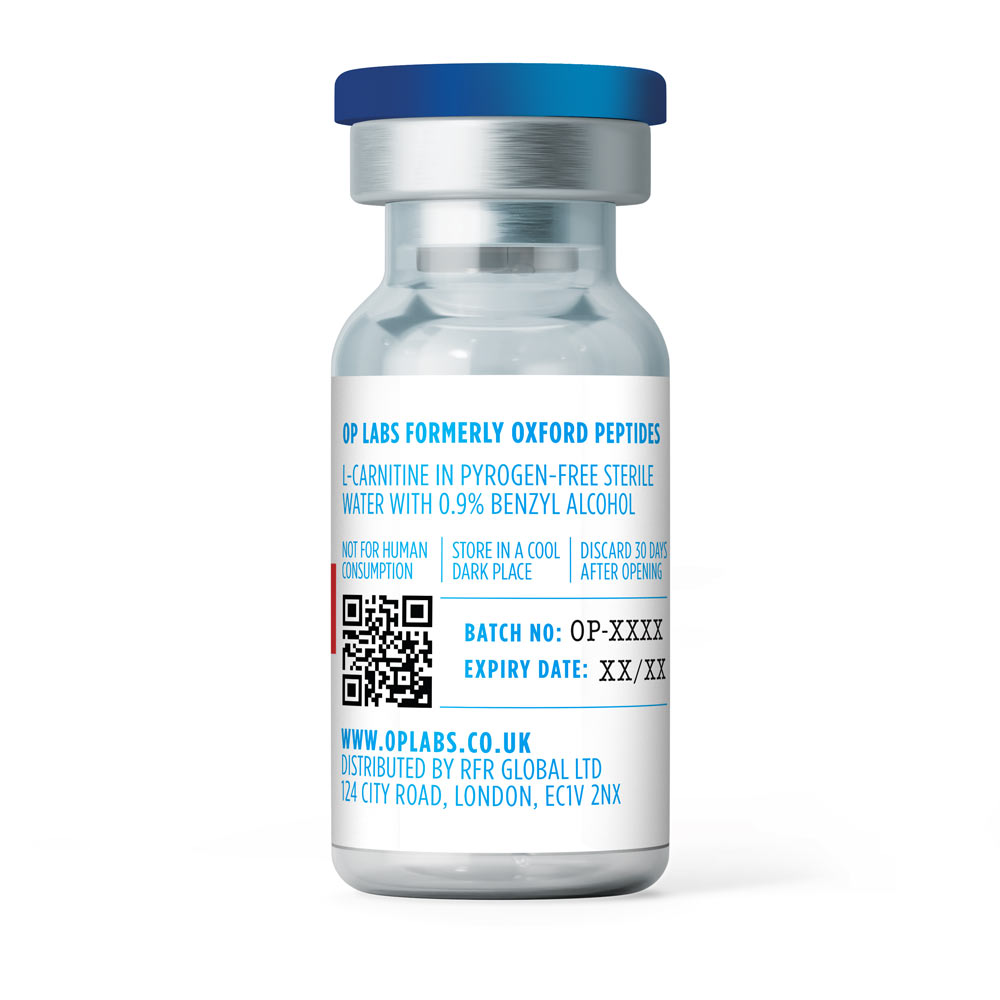
- Store in a cool dark place
- Sold for research purposes only
- Contact us for Wholesale Orders
Download COA here: L-Carnitine_COA.pdf
Please note: if you have a different Batch ID, please contact us for the latest COA.
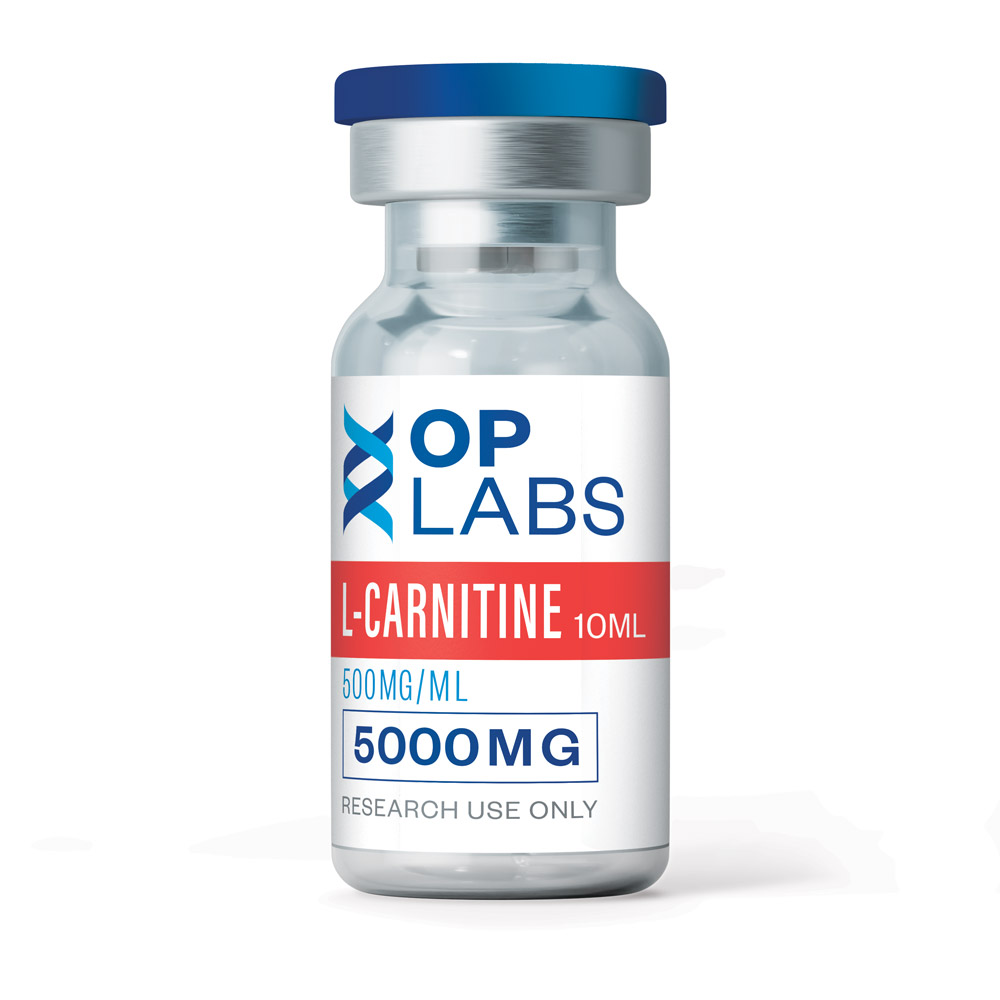
L-Carnitine
Synonyms / Designations: L-Carnitine, Levocarnitine, (R)-3-hydroxy-4-(trimethylazaniumyl)butanoate
CAS Number: 541-15-1
Molecular Formula: C7H15NO3
Molecular Weight: 161.20 g/mol
Chemical Classification: Naturally occurring quaternary ammonium compound; zwitterionic small molecule
Purity: Manufactured to ≥ 99 % chemical purity (typical, specification-based)
Appearance: Clear liquid.
Pack Size: 10ml
Storage: Store in a cool dark place. Discard 30 DAYS after opening.
Description & Mechanism
L-Carnitine is a naturally occurring small molecule involved in mitochondrial fatty acid metabolism. In biochemical and cellular research systems, L-Carnitine functions as a carrier molecule facilitating the transport of long-chain fatty acids across the inner mitochondrial membrane via the carnitine shuttle mechanism.
Within experimental models, L-Carnitine participates in reversible esterification reactions with acyl-CoA derivatives, forming acylcarnitines that are translocated into the mitochondrial matrix for β-oxidation. This process is central to studies of cellular energy metabolism, mitochondrial function, and lipid handling under controlled laboratory conditions.
L-Carnitine is widely used as a reference compound in metabolic research due to its well-characterised chemical structure, stability, and conserved biochemical role across species.
Applications in Research
- As a molecular tool for studying mitochondrial fatty acid transport mechanisms
- Investigation of cellular energy metabolism and β-oxidation pathways
- Use as a reference compound in metabolic, enzymatic, and transporter assays
- In vitro and ex vivo studies examining acylcarnitine formation and turnover
Handling & Stability
- Store in a cool dark place. Discard 30 DAYS after opening.
- Shelf life: 36 MONTHS from production
Specifications Summary
Purity: ≥ 99 %
Appearance: Clear liquid
Molecular Weight: 161.20 g/mol
Chemical Type: Quaternary ammonium compound
Solubility: Water
Storage: Store in a cool dark place. Discard 30 DAYS after opening
Pack Size: 10ml
Precautions & Notes
- Experimental behaviour of L-Carnitine may depend on concentration, cellular model, and metabolic state
- Ionic strength and pH of assay buffers may influence transport and binding interactions
- Appropriate controls are recommended to distinguish specific metabolic effects from osmotic or ionic effects
- Intended strictly for laboratory research use; not for human or veterinary application
References
Bremer J. Carnitine—metabolism and functions. Physiological Reviews, 1983.
https://pubmed.ncbi.nlm.nih.gov/6361812/
McGarry J.D., Brown N.F. The mitochondrial carnitine palmitoyltransferase system. European Journal of Biochemistry, 1997.
https://pubmed.ncbi.nlm.nih.gov/9063439/
Hoppel C. The role of carnitine in normal and altered fatty acid metabolism. American Journal of Kidney Diseases, 2003.
https://pubmed.ncbi.nlm.nih.gov/12751049/
NIH PubChem. L-Carnitine. CID 10917.
https://pubchem.ncbi.nlm.nih.gov/compound/10917
Keywords: L-Carnitine, Levocarnitine, Carnitine Shuttle, Mitochondrial Metabolism, Fatty Acid Transport