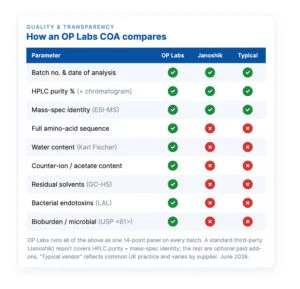


Representative specimen data. These are typical results for this product. Actual results are batch-specific and are printed on the certificate for the batch number on your vial. Research use only.
| Parameter | Result |
|---|---|
| Product name | PTD-DBM |
| CAS number | 1609454-11-6 |
| Molecular formula | C124H223N61O28S2 |
| Molecular weight | 3080.7 g/mol |
| Appearance | White to off-white powder |
| Test method | RP-HPLC (C18), UV detection at 220 nm |
| Purity (HPLC) | 98.80% (specification ≥ 98.0%) |
| Mass-spec identity | ESI-MS (positive): [M+2H]2+ 1541.4, confirming 3080.7 g/mol |
| Water content | 5.8% (Karl Fischer, specification ≤ 10.0%) |
| Analysis date | Representative specimen — the analysis date is printed on each batch certificate |
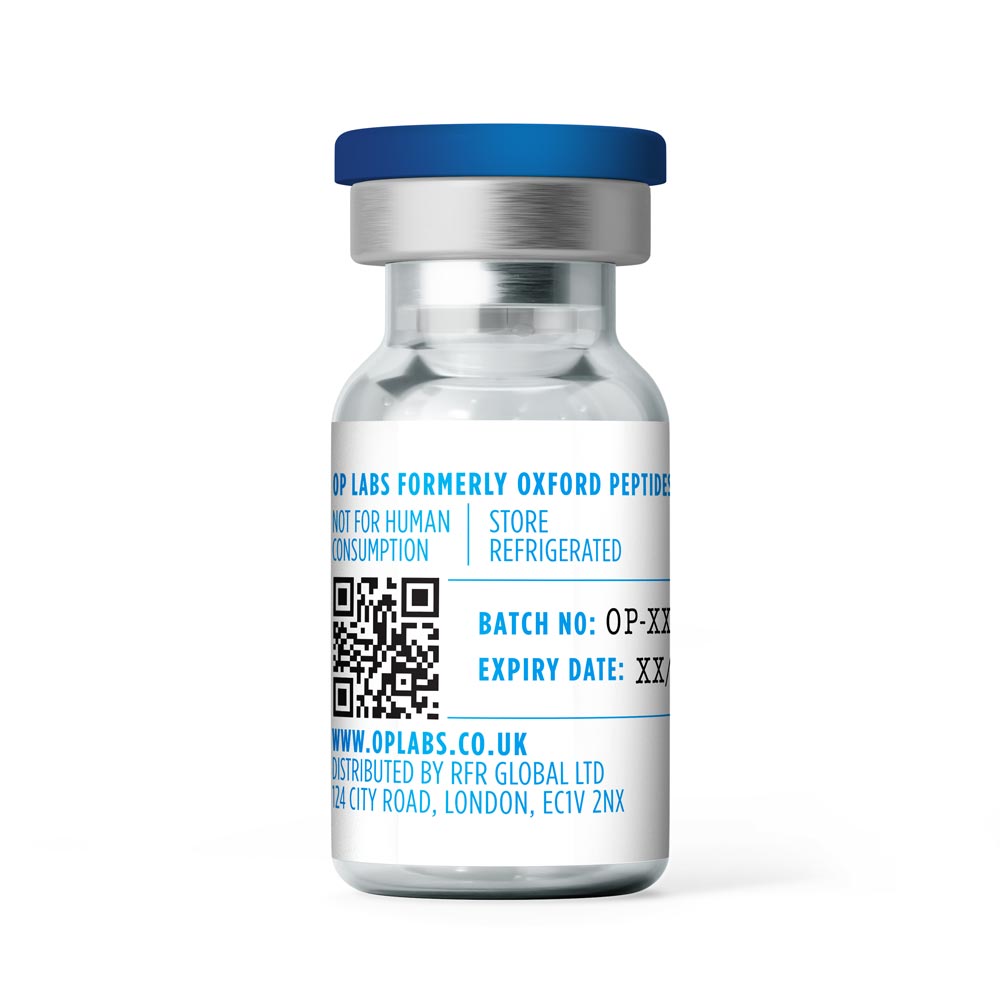
- OP Labs formerly Oxford Peptides
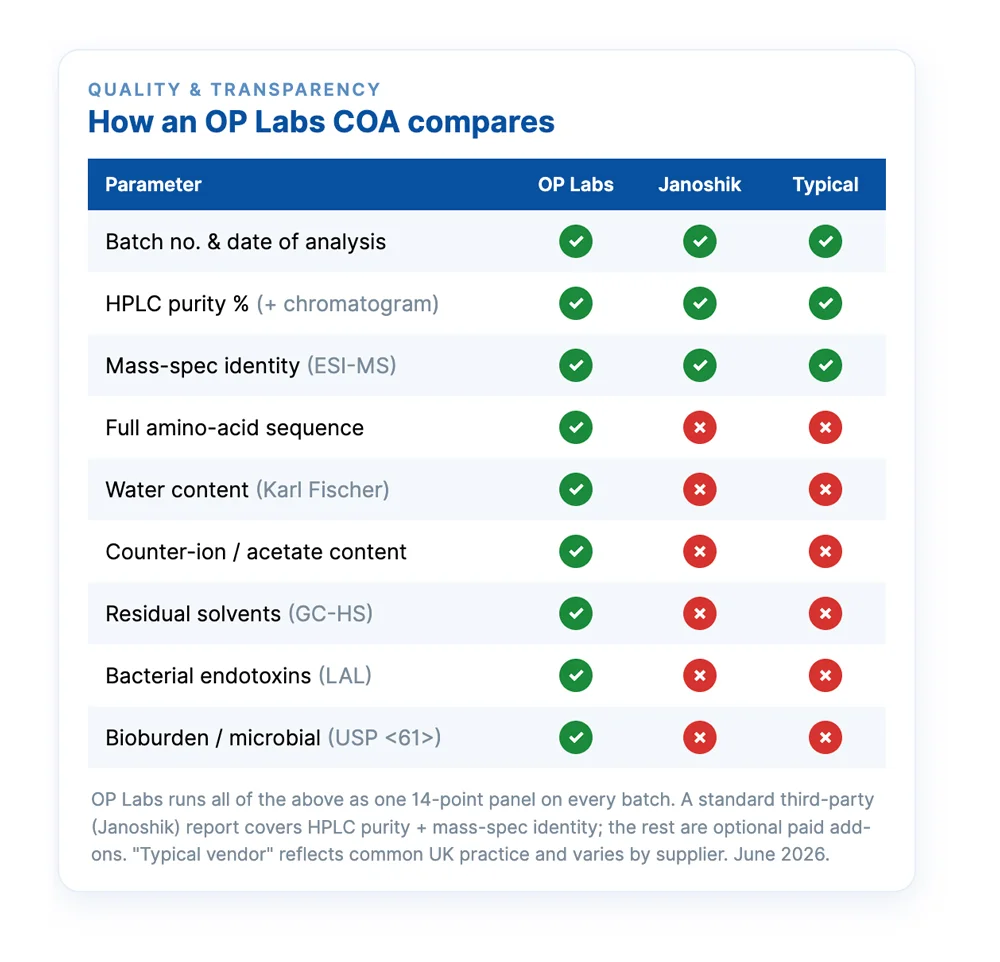
- Batch HPLC tested at 98.5%+ purity
- Store frozen long term or in fridge when ready to be used
- Sold for research purposes only
- Contact us for Wholesale Orders
Search our database for full COA analytics here.
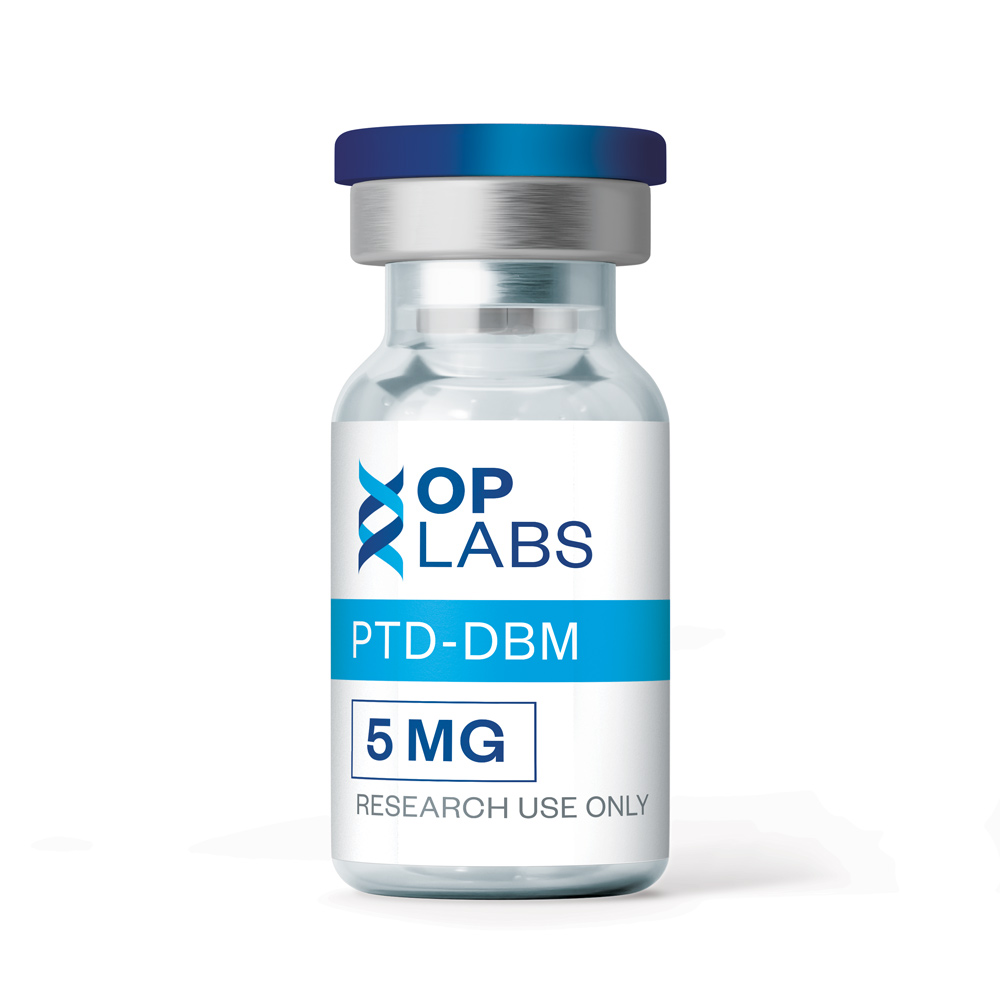
PTD-DBM
Synonyms / Designations: PTD-DBM; Protein Transduction Domain–Dishevelled Binding Motif peptide; CXXC5–Dishevelled interaction inhibitor
Amino Acid Sequence: RRRRRRRRGGGGRKTGHQICKFRKC (octa-arginine PTD + GGGG linker + Dishevelled-binding motif)
CAS Number: N/A
Molecular Formula: C124H225N61O28S2
Molecular Weight: ~3082.62 g/mol (supplier analytical data)
Purity: ≥ 99 % (HPLC)
Appearance: White to off-white lyophilised powder
Pack Size: 5 mg (total)
Storage: Desiccated, protected from light, stored at –20 °C or below
Solubility: Soluble in water and buffered aqueous solutions
Description & Mechanism
PTD-DBM is a rationally designed research peptide used to disrupt the protein–protein interaction between CXXC5 (a negative-feedback regulator of Wnt/β-catenin signalling) and Dishevelled (Dvl). The Dishevelled-binding motif competes with CXXC5 for the same docking surface on Dvl, while the octa-arginine protein transduction domain enables intracellular delivery in cell and tissue models.
By displacing CXXC5 from Dvl, the peptide de-represses Wnt/β-catenin signalling in experimental systems, used as a molecular tool to study β-catenin stabilisation and target-gene transcription. In the originating work it was applied to rodent skin to study hair-follicle biology and wound-induced hair-follicle neogenesis. All applications are mechanistic/preclinical; observed effects depend on concentration and model system.
Applications in Research
- In-vitro disruption of the CXXC5–Dvl protein–protein interaction to study Wnt/β-catenin signalling
- Cellular reporter assays (e.g. TOPflash / β-catenin transcriptional activity)
- Preclinical rodent hair-follicle research (hair regrowth and wound-induced hair neogenesis)
- Cell-penetrating peptide delivery and cutaneous wound-healing models
Specifications Summary
| Parameter | Typical Value / Range |
|---|---|
| Purity (HPLC) | ≥ 99 % |
| Appearance | White to off-white lyophilised powder |
| Molecular Weight | ~3082.62 g/mol (supplier analytical data) |
| Peptide Type | Synthetic cell-penetrating peptide (CPP) / protein–protein-interaction inhibitor peptide |
| Solubility | Water, buffered aqueous solutions |
| Storage | –20 °C, desiccated, dark |
| Pack Size | 5 mg (total) |
Handling, Reconstitution & Stability
- Weigh under dry conditions; peptide is hygroscopic
- Reconstitute in sterile water or appropriate buffered aqueous solution depending on assay requirements
- Avoid vigorous agitation during dissolution
- Filter sterilize if required (e.g. 0.22 µm) prior to use
- Aliquot and store reconstituted solutions at –20 °C or below to minimise degradation
- Avoid repeated freeze–thaw cycles
Precautions & Notes
- Highly cationic, arginine-rich peptide containing two cysteines — handle under reducing/inert conditions to limit disulfide oxidation
- Experimental behaviour is dependent on concentration, model system and exposure conditions
- Prolonged exposure to light, elevated temperature or aqueous environments may reduce stability
- Intended strictly for laboratory research use; not for human or veterinary application
References
Lee S-H, Seo SH, Lee D-H, et al. Targeting of CXXC5 by a Competing Peptide Stimulates Hair Regrowth and Wound-Induced Hair Neogenesis. J Invest Dermatol. 2017;137(11):2260-2269.
https://pubmed.ncbi.nlm.nih.gov/28595998/
Lee S-H, et al. The Dishevelled-binding protein CXXC5 negatively regulates cutaneous wound healing. J Exp Med. 2015;212(7):1061-1080.
https://pmc.ncbi.nlm.nih.gov/articles/PMC4493411/
Kim H-Y, et al. Small molecule inhibitors of the Dishevelled–CXXC5 interaction… EMBO Mol Med. 2016;8(4):375-387.
https://pmc.ncbi.nlm.nih.gov/articles/PMC4818757/
Lee et al. 2017 (full text). ScienceDirect.
https://www.sciencedirect.com/science/article/pii/S0022202X17315555
Keywords: PTD-DBM, CXXC5, Dishevelled, Wnt beta-catenin, cell-penetrating peptide