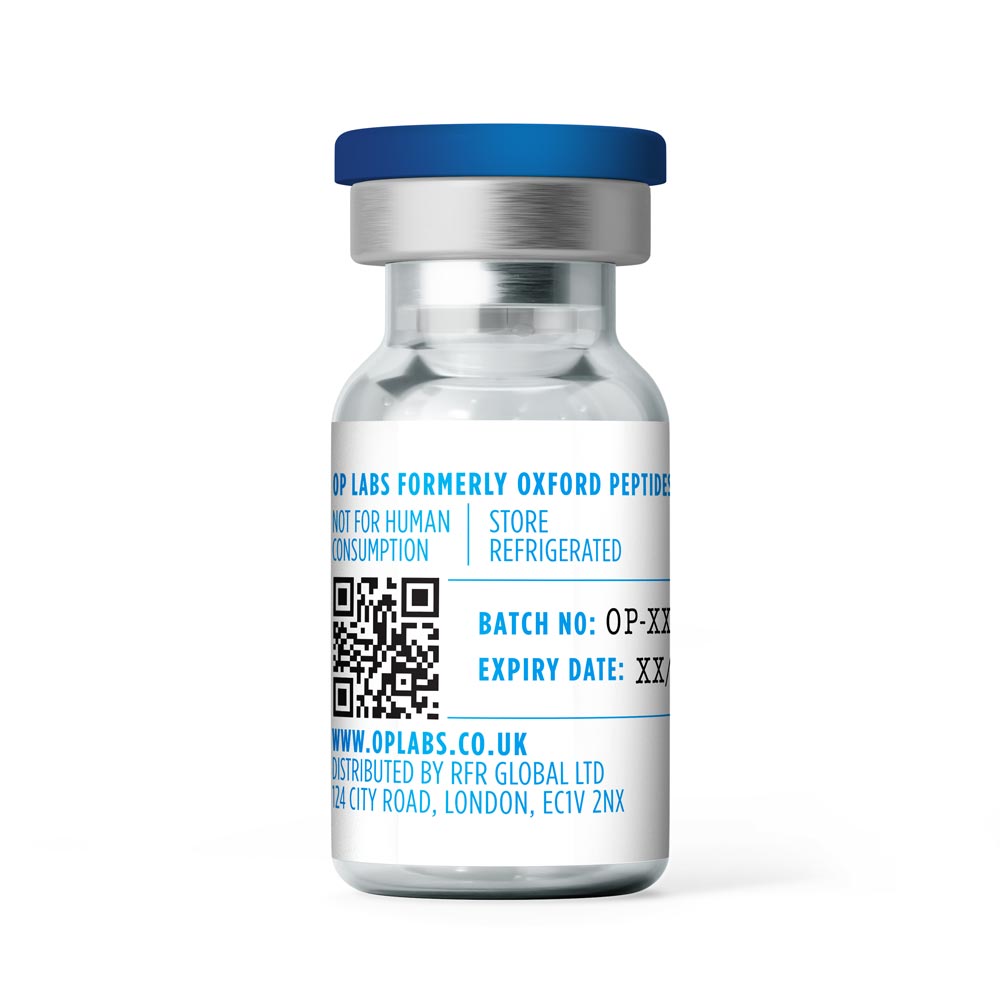


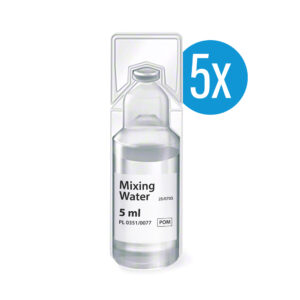
- OP Labs formerly Oxford Peptides.
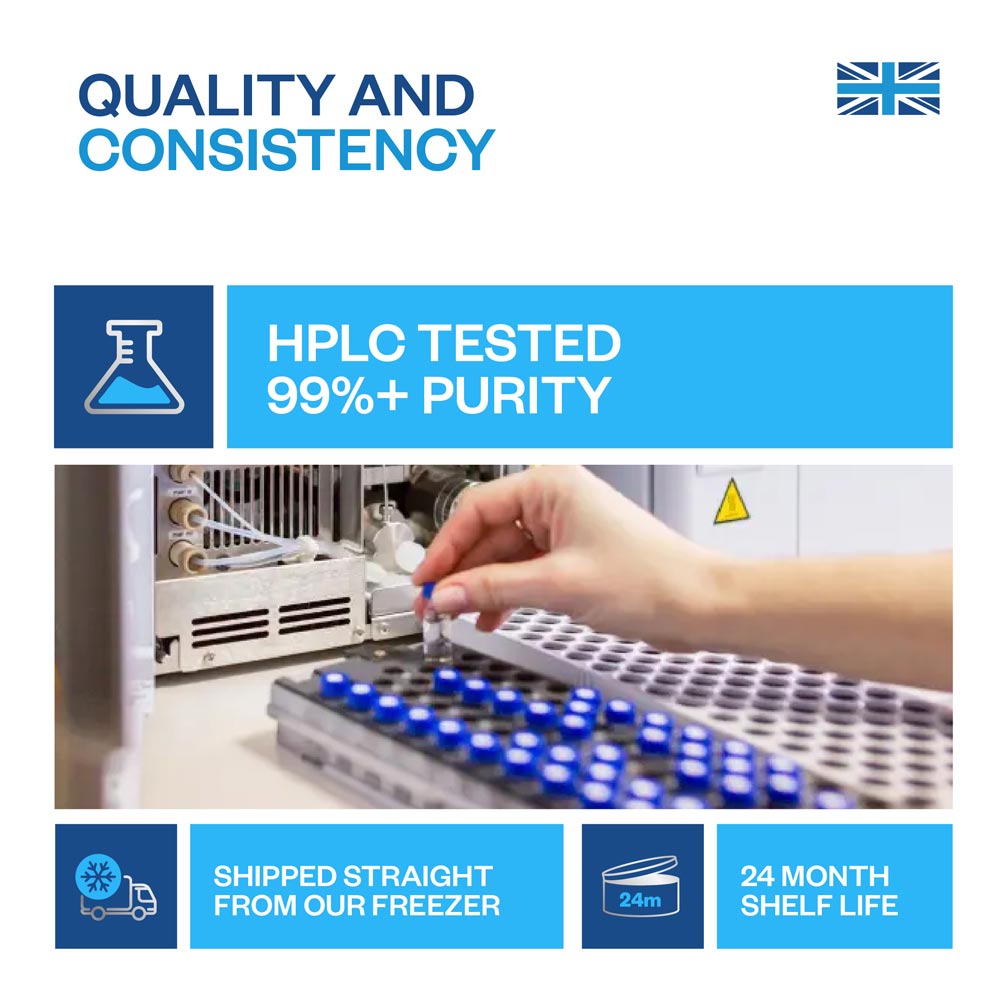
- Batch HPLC tested at 99%+ purity.
- Store frozen long term or in fridge when ready to be used
- Sold for research purposes only.
- Contact us for Wholesale Orders.
Download COA here: GHRP2_COA.pdf
Please note: if you have a different Batch ID please contact us for the latest COA.
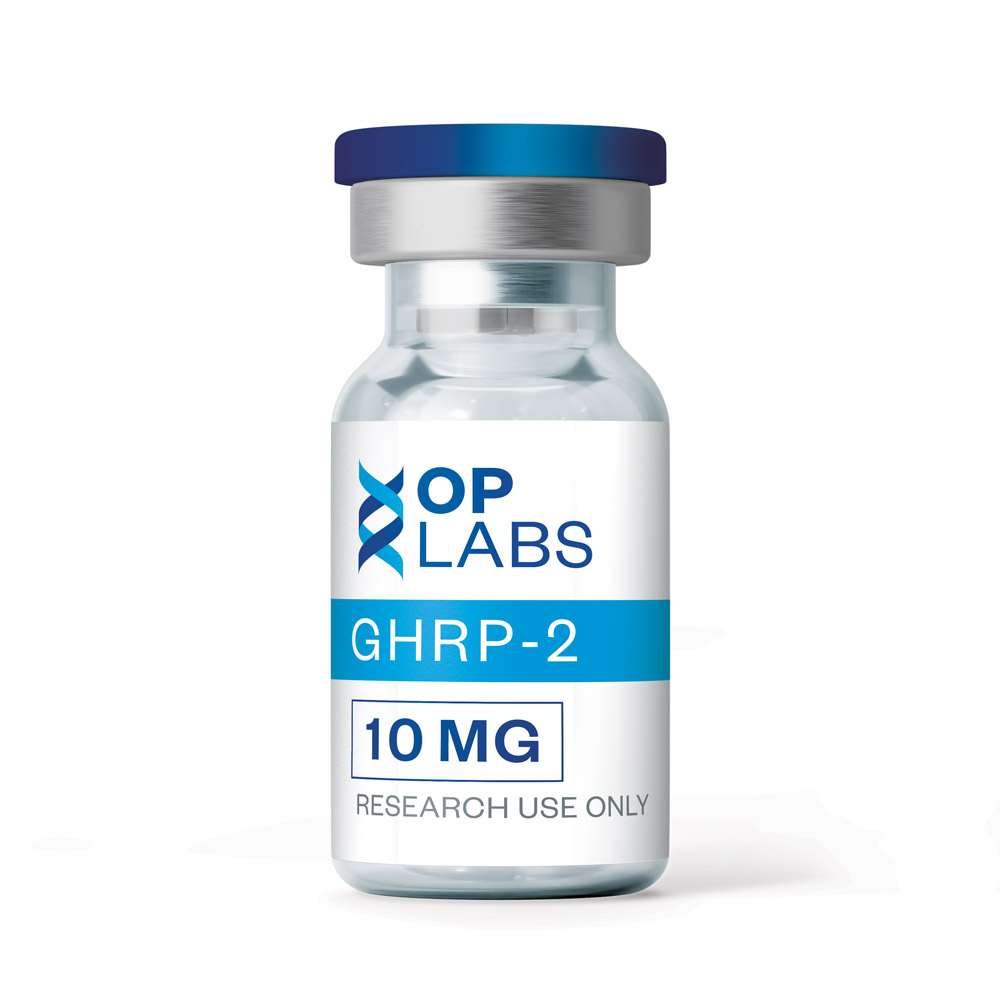
GHRP-2
Synonyms / Designations: GHRP-2, Growth Hormone Releasing Peptide-2, Pralmorelin, KP-102.
CAS Number: 158861-67-7.
Molecular Formula: C45H55N9O6
Molecular Weight: ~818.0 g/mol.
Purity: ≥ 99 % (HPLC).
Appearance: White to off-white lyophilised powder.
Pack Size: 10 mg (total).
Storage: Desiccated, protected from light, stored at –20 °C or below.
Solubility: Soluble in water and buffered aqueous solutions (e.g. PBS).
Description & Mechanism
GHRP-2 is a synthetic hexapeptide belonging to the class of growth hormone secretagogues, widely utilised in biochemical and physiological research to study receptor-mediated signalling within the hypothalamic–pituitary axis. It functions primarily as an agonist of the growth hormone secretagogue receptor (GHS-R1a), a G-protein-coupled receptor expressed in both central and peripheral tissues.
In cellular and in vivo research systems, GHRP-2 activates GHS-R1a independently of endogenous growth hormone-releasing hormone (GHRH), leading to downstream intracellular signalling cascades involving calcium mobilisation and modulation of second messenger pathways. These effects make GHRP-2 a useful molecular tool for investigating receptor activation dynamics, neuroendocrine regulation, and peptide–receptor interactions.
In preclinical research settings, exposure to GHRP-2 has been associated with altered signalling along the hypothalamic–pituitary axis, with downstream effects dependent on experimental model, dose, and exposure conditions. As such, GHRP-2 is commonly employed in mechanistic studies exploring peptide hormone signalling and receptor pharmacology.
Applications in Research
- As a molecular probe to study growth hormone secretagogue receptor (GHS-R1a) activation
- Investigation of neuroendocrine signalling pathways within the hypothalamic–pituitary axis
- In cell-based assays examining GPCR-mediated signal transduction and calcium flux
- In animal or ex vivo experimental models for mechanistic studies of peptide hormone signalling
- As a reference compound in receptor binding, agonist profiling, and structure–activity studies
Specifications Summary
| Parameter | Typical Value / Range |
|---|---|
| Purity (HPLC) | ≥ 99 % |
| Appearance | White to off-white lyophilised powder |
| Molecular Weight | ~818.0 g/mol |
| Peptide Type | Synthetic hexapeptide |
| Solubility | Water, buffered aqueous solutions |
| Storage | –20 °C, desiccated, dark |
| Pack Size | 3000 mg (research scale); bulk available |
Handling, Reconstitution & Stability
- Weigh under dry conditions; peptide is hygroscopic
- Reconstitute in sterile water or appropriate buffered aqueous solution depending on assay requirements.
- Filter sterilize if required (e.g. 0.22 µm) immediately prior to use.
- Aliquot reconstituted solutions and store at –20 °C or below to minimise degradation
Avoid repeated freeze–thaw cycles. - Inspect for precipitation or pH changes prior to use in sensitive assays.
Precautions & Notes
- GHRP-2 activity is concentration-dependent; appropriate dose–response controls are recommended.
- Peptide stability may be influenced by pH, temperature, and prolonged aqueous exposure..
- Light and elevated temperatures may contribute to degradation; store under protective conditions.
- Intended strictly for laboratory research use; not for human or veterinary application.
References
Bowers C.Y. et al. Growth hormone–releasing peptide (GHRP). Cellular and Molecular Life Sciences.
https://pubmed.ncbi.nlm.nih.gov/10604470/
Howard A.D. et al. A receptor in pituitary and hypothalamus that functions in growth hormone release. Science.
https://pubmed.ncbi.nlm.nih.gov/8700211/
Ghigo E. et al. Growth hormone–releasing peptides. European Journal of Endocrinology.
https://pubmed.ncbi.nlm.nih.gov/9010514/
Kojima M. et al. Ghrelin is a growth hormone–releasing acylated peptide from stomach. Nature.
https://pubmed.ncbi.nlm.nih.gov/10541310/
Keywords: GHRP-2, GHRP2, Pralmorelin, Growth Hormone Releasing Peptide-2