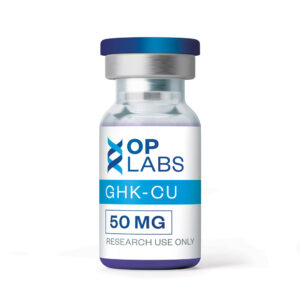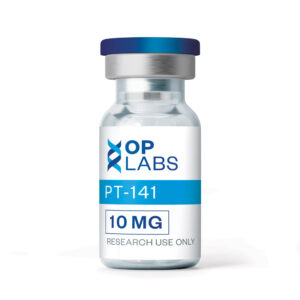



- OP Labs formerly Oxford Peptides
- Batch HPLC tested at ≥ 99% purity
- Storage: –20 °C long term; 2–8 °C short term
- Sold for research purposes only
TB-500
Synonyms / Designations: TB-500, TB-500 fragment, Ac-LKKTETQ, thymosin beta-4 (17-23) fragment
Molecular Formula: C38H68N10O14
Molecular Weight: ~889.0 g/mol
Peptide Length: 7 amino acids
Peptide Sequence: Ac-Leu-Lys-Lys-Thr-Glu-Thr-Gln (Ac-LKKTETQ)
Peptide Type: Synthetic N-acetylated heptapeptide corresponding to residues 17-23 of thymosin beta-4
Purity: ≥ 99% (HPLC, typical)
Appearance: White to off-white lyophilised powder
Pack Size: 5 mg (typical)
Storage: Desiccated, protected from light, stored at –20 °C or below
Solubility: Soluble in water and buffered aqueous solutions
Description & Mechanism
TB-500 is a synthetic N-acetylated seven-residue peptide (Ac-LKKTETQ) corresponding to residues 17-23 of thymosin beta-4, the region containing its actin-binding motif (LKKTET). It is used for experimental investigation of actin-binding dynamics, cell migration and cytoskeletal organisation in controlled research settings.
In biochemical and cellular research models, thymosin beta-4–related peptides are studied for their interaction with G-actin, influencing actin polymerisation and cytoskeletal remodelling. Observed responses depend on peptide concentration, exposure duration, cell type, and experimental conditions.
Applications in Research
• Investigation of actin dynamics and cytoskeletal regulation
• In vitro studies of cell migration and cellular organisation
• Experimental models examining tissue structure and repair signalling
• Reference peptide in thymosin beta-4–related research
Precautions & Notes
- Experimental outcomes depend on cell type and assay conditions.
- Buffer composition, pH, and ionic strength may influence peptide stability.
- Appropriate controls are recommended.
- Intended strictly for laboratory research use only.
References
Sosne G., Qiu P., Goldstein A.L., Wheater M. Biological activities of thymosin beta-4 defined by active sites in short peptide sequences. FASEB Journal, 2010; 24(7):2144-2151.
https://doi.org/10.1096/fj.09-142307
Keywords: TB-500, TB-500 Fragment, Ac-LKKTETQ, Thymosin Beta-4 (17-23), Synthetic Peptide, Actin Regulation, Cytoskeletal Dynamics, Research Peptide