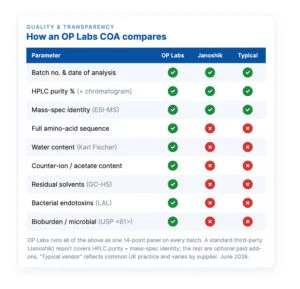

Representative specimen data. These are typical results for this product. Actual results are batch-specific and are printed on the certificate for the batch number on your vial. Research use only.
| Parameter | Result |
|---|---|
| Product name | Vilon |
| CAS number | 45234-02-4 |
| Molecular formula | C11H21N3O5 |
| Molecular weight | 275.3 g/mol |
| Appearance | White to off-white powder |
| Test method | RP-HPLC (C18), UV detection at 220 nm |
| Purity (HPLC) | 98.90% (specification ≥ 98.0%) |
| Mass-spec identity | ESI-MS (positive): [M+H]+ 276.3, confirming 275.3 g/mol |
| Water content | 7.1% (Karl Fischer, specification ≤ 10.0%) |
| Analysis date | Representative specimen — the analysis date is printed on each batch certificate |
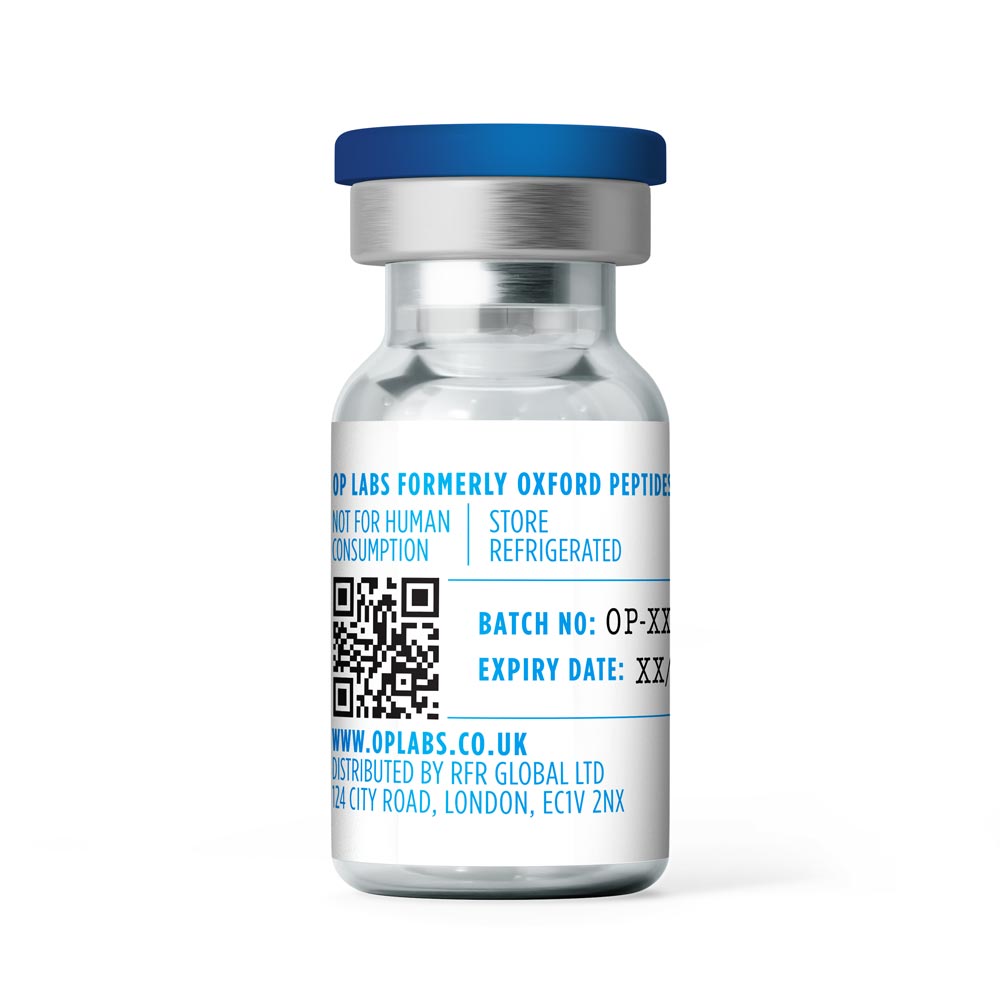
- OP Labs formerly Oxford Peptides
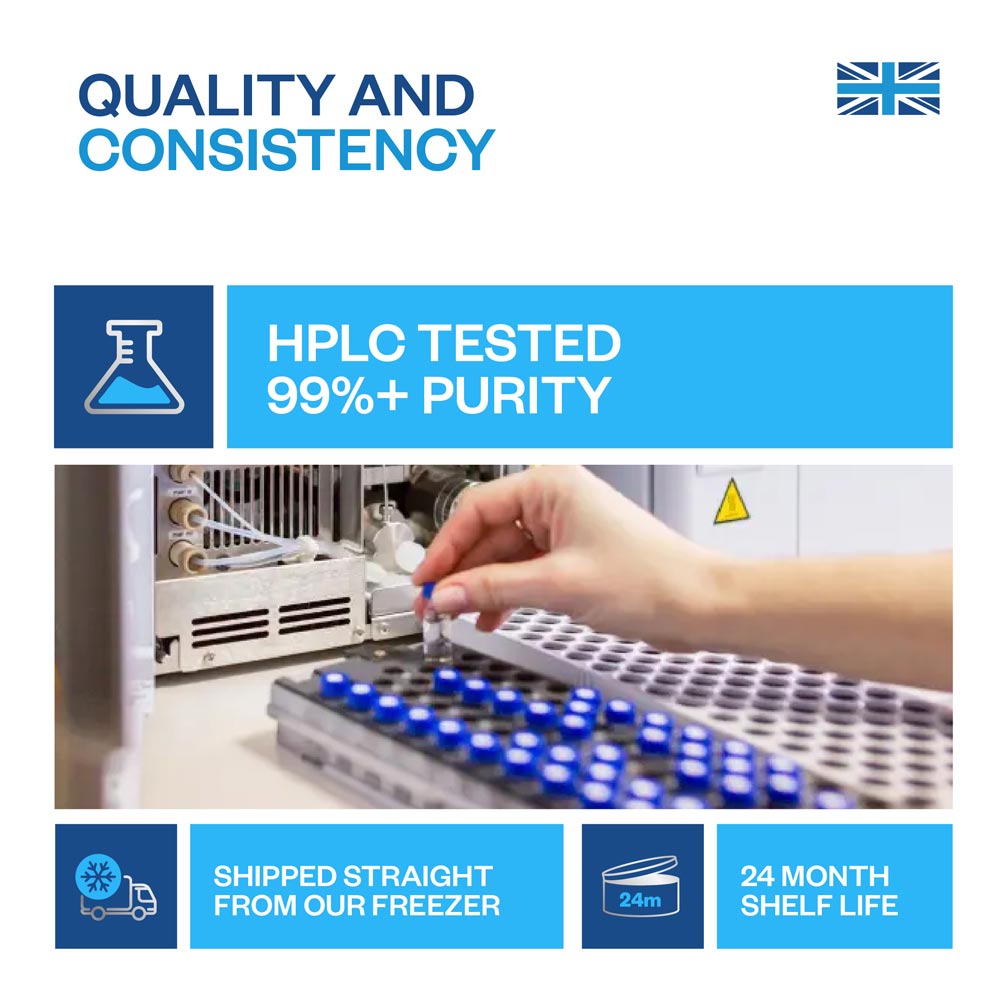
- Batch HPLC tested at 98.5%+ purity
- Store frozen long term or in fridge when ready to be used
- Sold for research purposes only
- Contact us for Wholesale Orders
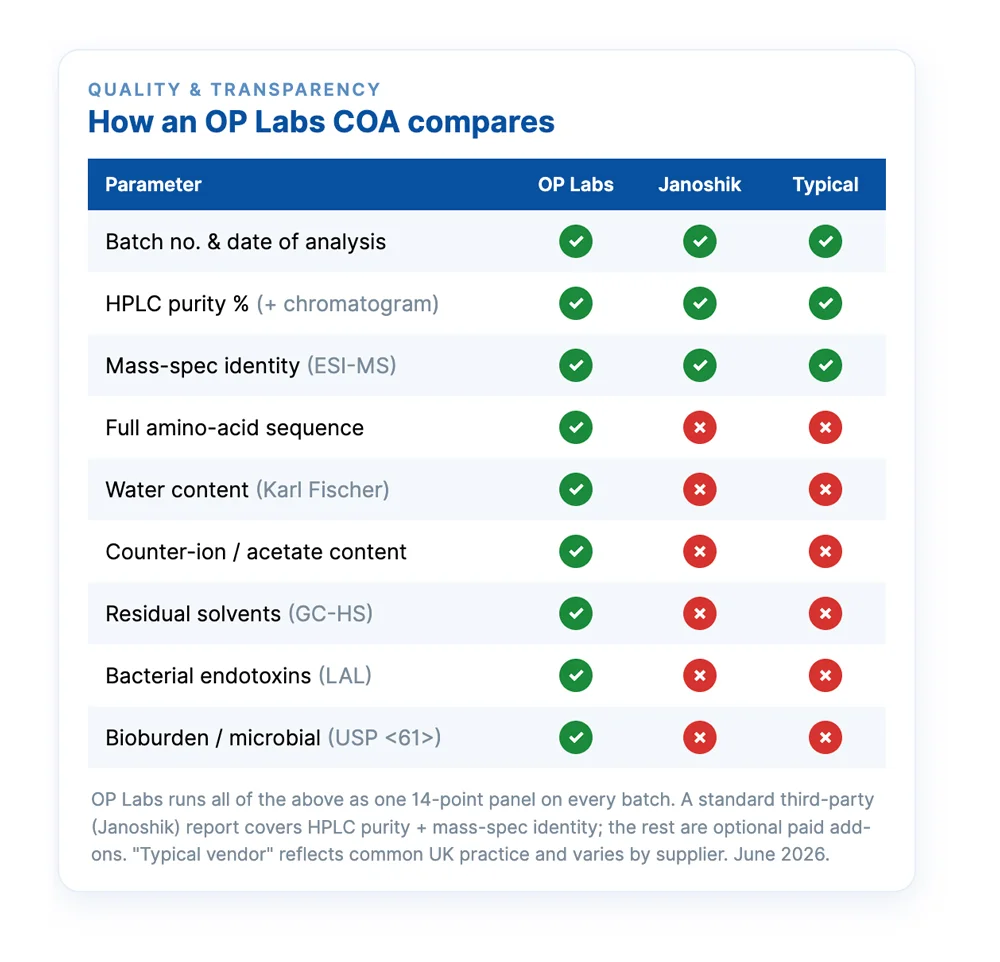
Search our database for full COA analytics here.
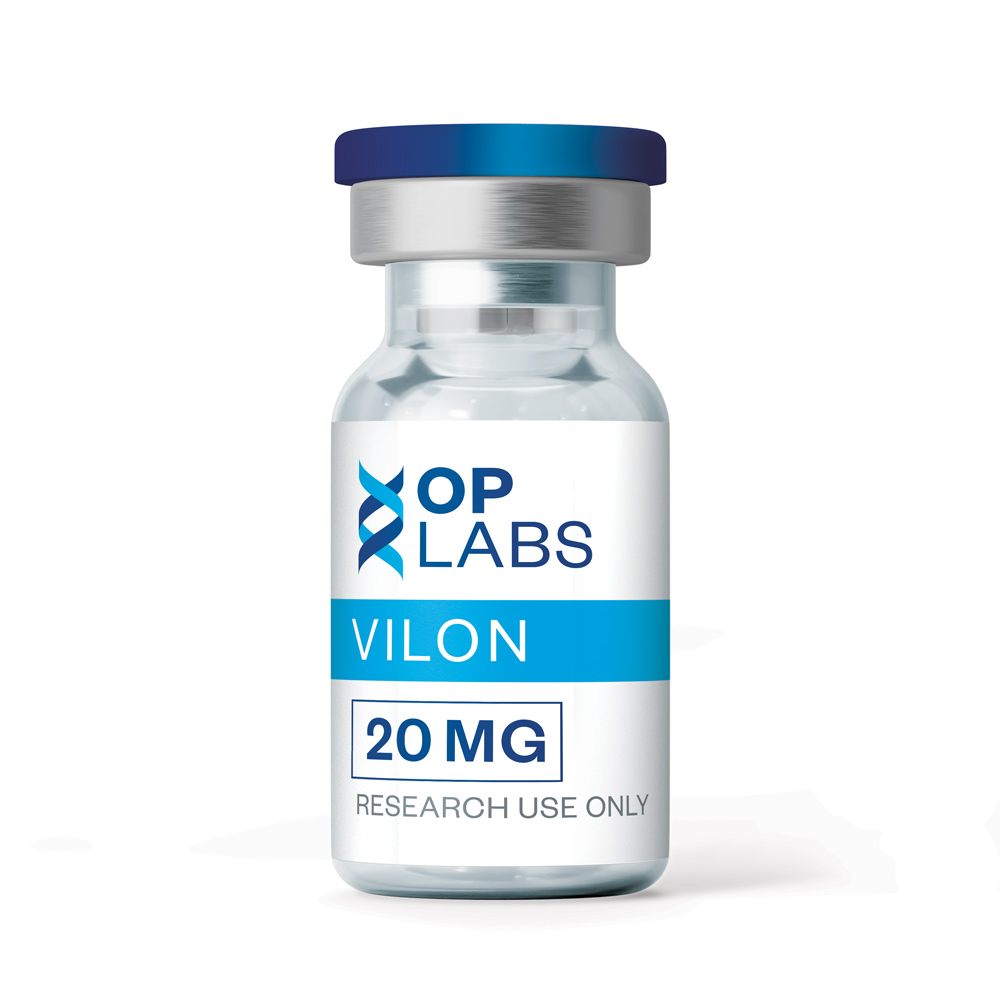
Vilon
Synonyms / Designations: Vilon; KE; Lys-Glu; L-lysyl-L-glutamic acid; immune dipeptide bioregulator (Khavinson family)
CAS Number: 45234-02-4
Molecular Formula: C11H21N3O5
Molecular Weight: 275.30 g/mol
Purity: ≥ 99 % (HPLC)
Appearance: White to off-white lyophilised powder
Pack Size: 20 mg (total)
Storage: Desiccated, protected from light, stored at –20 °C or below
Solubility: Soluble in water and buffered aqueous solutions
Description & Mechanism
Vilon (Lys-Glu) is studied in vitro as a minimal immune/thymic-directed peptide probe. It has been reported to affect structural and facultative heterochromatin in cultured human lymphocytes, increasing the proportion of transcriptionally active euchromatin and reactivating nucleolar organiser regions in cells from older donors — used experimentally to study epigenetic and chromatin-level regulation of gene expression.
In rodent models it has been studied as a probe in tumour-growth and lifespan experiments and as a co-activator of specific genes within the Khavinson gene-regulation framework. Frequently cited as one of the shortest peptides reported to show biological activity, it is used as a reference “minimal peptide” in structure–activity studies. Observed effects are dependent on concentration, model system and exposure conditions.
Applications in Research
- In-vitro chromatin-structure / heterochromatin studies in human lymphocytes
- Epigenetic gene-reactivation and gene-expression research
- Preclinical rodent tumour-growth and lifespan / biomarker models
- Reference “minimal peptide” probe for structure–activity studies
Specifications Summary
| Parameter | Typical Value / Range |
|---|---|
| Purity (HPLC) | ≥ 99 % |
| Appearance | White to off-white lyophilised powder |
| Molecular Weight | 275.30 g/mol |
| Peptide Type | Synthetic dipeptide |
| Solubility | Water, buffered aqueous solutions |
| Storage | –20 °C, desiccated, dark |
| Pack Size | 20 mg (total) |
Handling, Reconstitution & Stability
- Weigh under dry conditions; peptide is hygroscopic
- Reconstitute in sterile water or appropriate buffered aqueous solution depending on assay requirements
- Avoid vigorous agitation during dissolution
- Filter sterilize if required (e.g. 0.22 µm) prior to use
- Aliquot and store reconstituted solutions at –20 °C or below to minimise degradation
- Avoid repeated freeze–thaw cycles
Precautions & Notes
- Experimental behaviour is dependent on concentration, model system and exposure conditions
- Appropriate experimental controls are recommended
- Prolonged exposure to light, elevated temperature or aqueous environments may reduce stability
- Intended strictly for laboratory research use; not for human or veterinary application
References
Anisimov VN, Khavinson VKh, et al. A synthetic dipeptide Vilon (L-Lys-L-Glu) inhibits growth of spontaneous tumors and increases life span of mice. Dokl Biol Sci. 2000.
https://pubmed.ncbi.nlm.nih.gov/10944717/
Khavinson VKh, Popovich IG, et al. Peptide Regulation of Gene Expression: A Systematic Review. Molecules. 2021;26(22):7053.
https://www.mdpi.com/1420-3049/26/22/7053
Khavinson VKh. Peptides and ageing. Neuro Endocrinol Lett. 2002;23(Suppl 3):11-144.
https://pubmed.ncbi.nlm.nih.gov/12374906/
PubChem Compound Summary, CID 7010502 (Lysylglutamic acid, Lys-Glu).
https://pubchem.ncbi.nlm.nih.gov/compound/7010502
Keywords: Vilon, KE, Lys-Glu, immune dipeptide bioregulator