


- OP Labs formerly Oxford Peptides
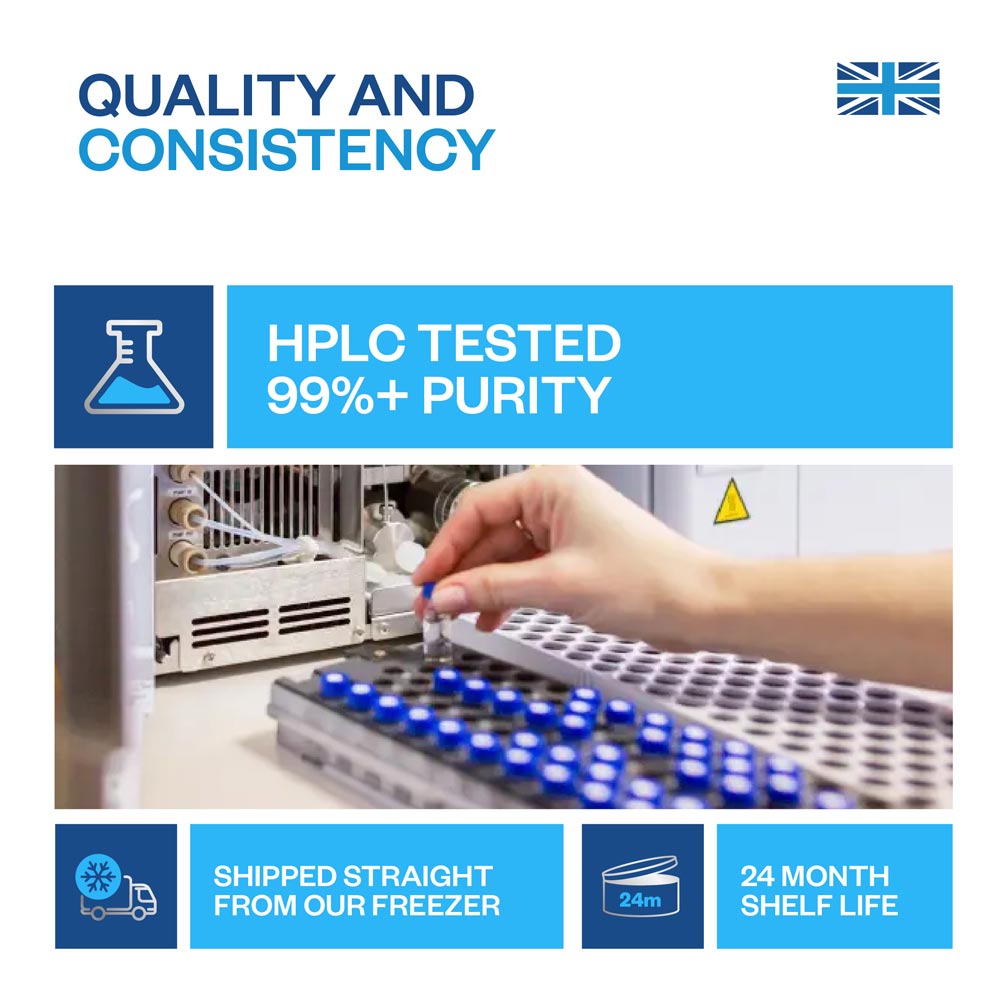
- Batch HPLC tested at 99%+ purity
- Store frozen long term or in fridge when ready to be used
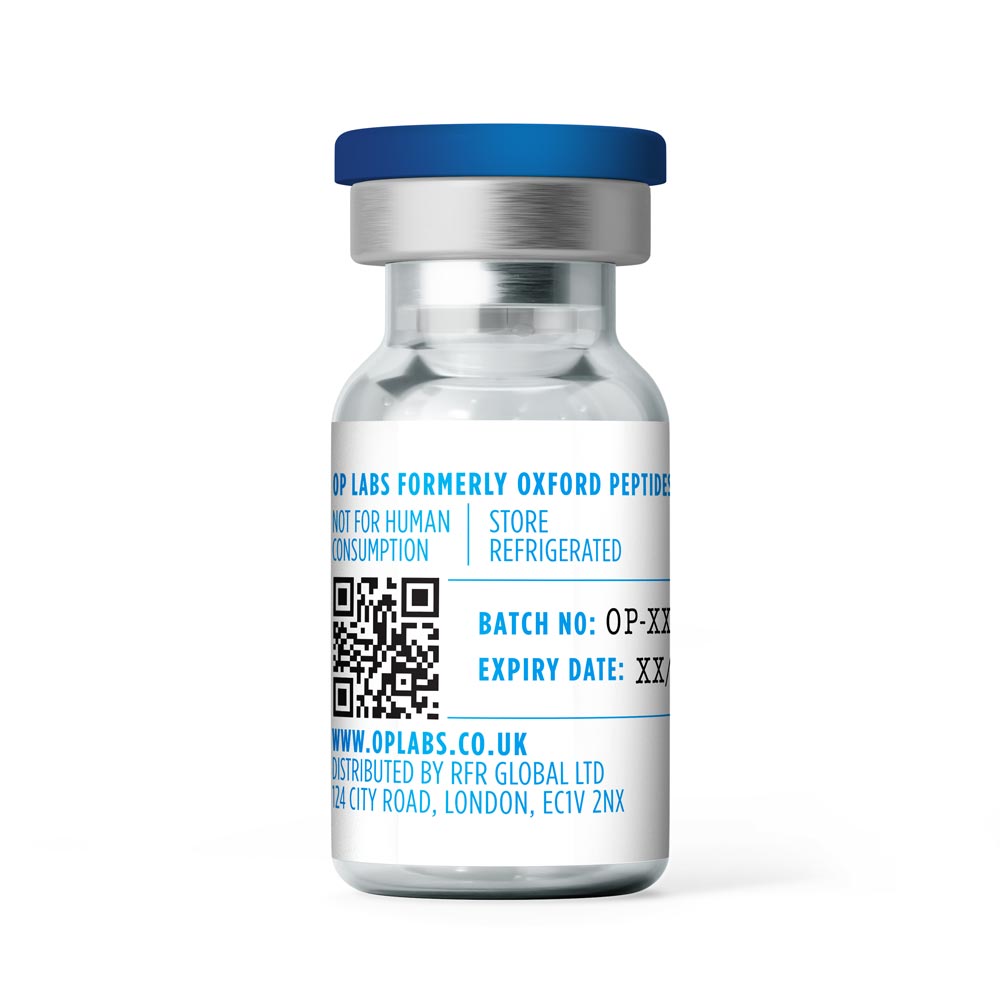
- Sold for research purposes only
- Contact us for Wholesale Orders
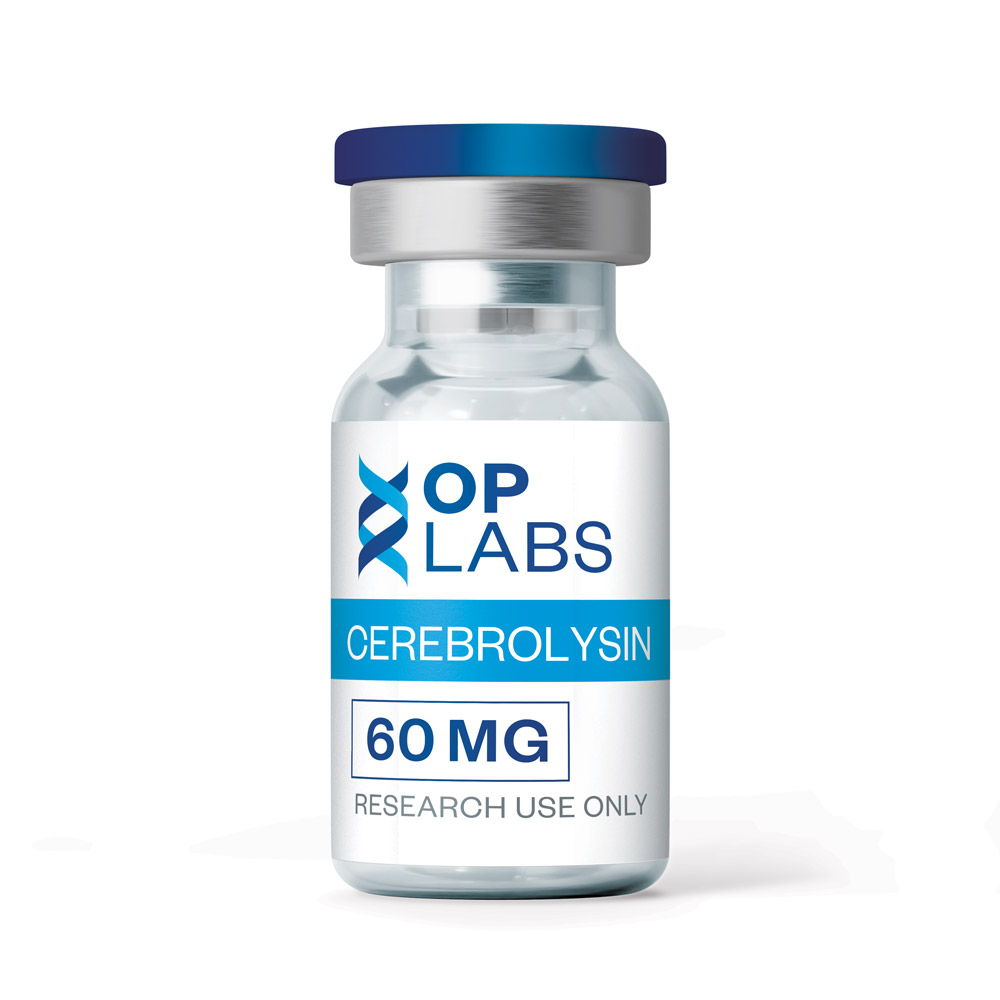
Cerebrolysin
Synonyms / Designations: Cerebrolysin, FPF-1070, Porcine Brain-Derived Neuropeptide Preparation
Composition: Mixture of low-molecular-weight neuropeptides and free amino acids derived from porcine brain tissue
Molecular Weight Range: < 10 kDa (peptide fraction)
Appearance: Clear to slightly opalescent solution or lyophilised powder
Pack Size: 60 mg (total)
Storage: Protected from light, stored at 2–8 °C or −20 °C for long-term storage
Solubility: Soluble in water and physiological saline
Description & Mechanism
Cerebrolysin is a peptide preparation produced by standardised enzymatic proteolysis of purified porcine brain proteins. The resulting mixture contains biologically active low-molecular-weight neuropeptides and free amino acids that mimic the activity of endogenous neurotrophic factors. It is used as a research tool for studying neuroprotective and neurotrophic signalling in cellular and preclinical experimental models.
In biochemical and cellular research models, cerebrolysin-derived peptides have been reported to modulate neurotrophic factor pathways, including those associated with nerve growth factor (NGF) and brain-derived neurotrophic factor (BDNF). Observed effects in experimental systems include modulation of neuronal survival, synaptic plasticity, and cellular differentiation markers. Experimental outcomes are highly dependent on concentration, model system, and assay conditions.
Applications in Research
- As a research tool to study neurotrophic factor signalling and neuroprotective mechanisms
- Investigation of neuronal survival and synaptic plasticity pathways in in vitro models
- In vitro and ex vivo studies examining neuropeptide effects on cellular differentiation and neurite outgrowth
- Preclinical experimental models for mechanistic investigation of neurotrophic peptide biology
Specifications Summary
| Parameter | Typical Value / Range |
|---|---|
| Purity (HPLC) | ≥ 98 |
| Appearance | Lyophilised powder or clear solution |
| Molecular Weight Range | < 10 kDa (peptide fraction) |
| Preparation Type | Enzymatic proteolysate of porcine brain proteins |
| Solubility | Water, physiological saline |
| Storage | 2–8 °C or −20 °C, protected from light |
| Pack Size | 60 mg |
Handling, Reconstitution & Stability
- If lyophilised, reconstitute in sterile water or appropriate buffered aqueous solution depending on assay requirements
- Avoid vigorous agitation during dissolution
- Filter sterilize if required (e.g. 0.22 μm) prior to use
- Aliquot and store reconstituted solutions at −20 °C or below to minimise degradation
- Avoid repeated freeze–thaw cycles
- Use reconstituted solutions promptly for optimal experimental reproducibility
Precautions & Notes
- Experimental behaviour of Cerebrolysin is dependent on concentration, model system, and exposure conditions
- Due to its complex composition of multiple neuropeptides and amino acids, appropriate experimental controls are recommended
- Prolonged exposure to light, elevated temperature, or aqueous environments may reduce stability
- Intended strictly for laboratory research use; not for human or veterinary application
References
Windisch M. et al. Neurotrophic activities and therapeutic experience with a brain derived peptide preparation. Journal of Neural Transmission, 2006.
https://pubmed.ncbi.nlm.nih.gov/17385063/
Zhang C. et al. Cerebrolysin enhances neurogenesis in the ischemic brain and improves functional outcome after stroke. Journal of Neuroscience Research, 2010.
https://pubmed.ncbi.nlm.nih.gov/20175202/
Reviews
There are no reviews yet.