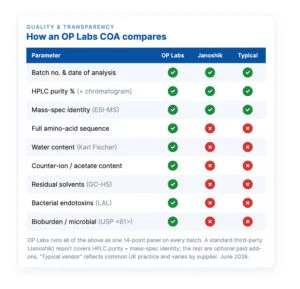
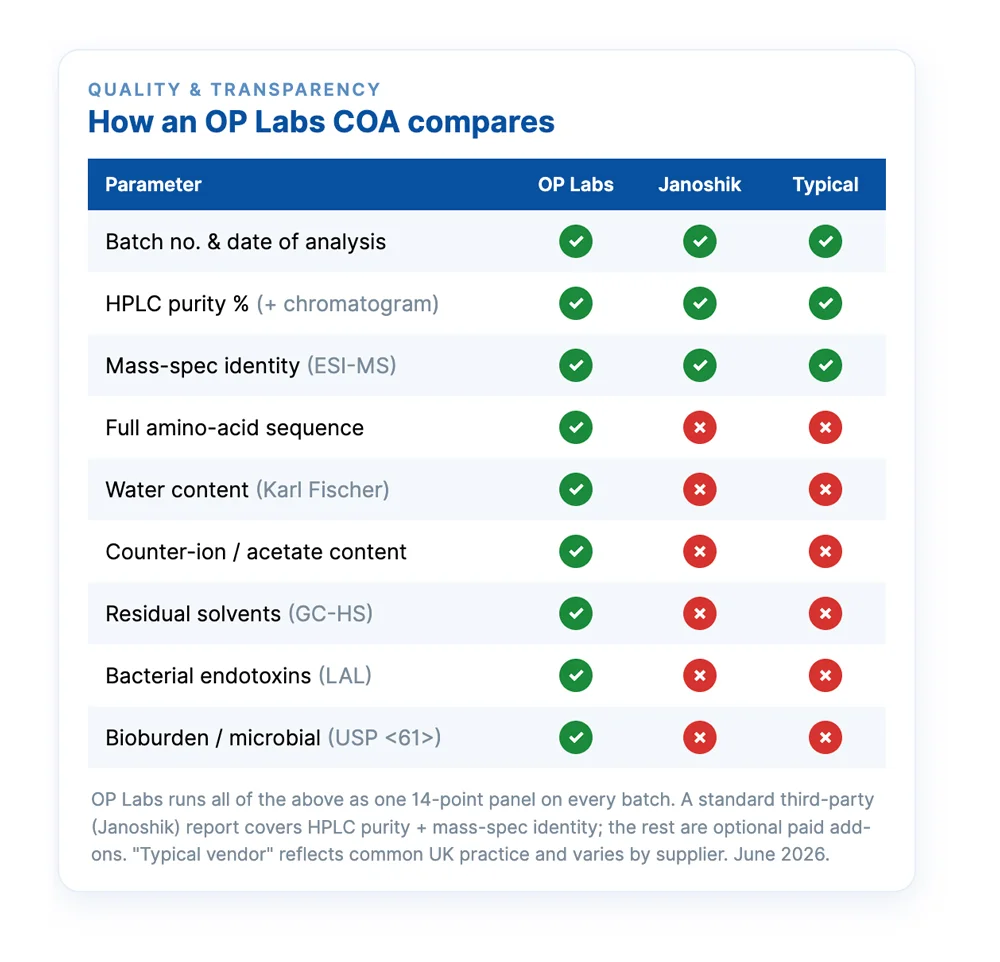
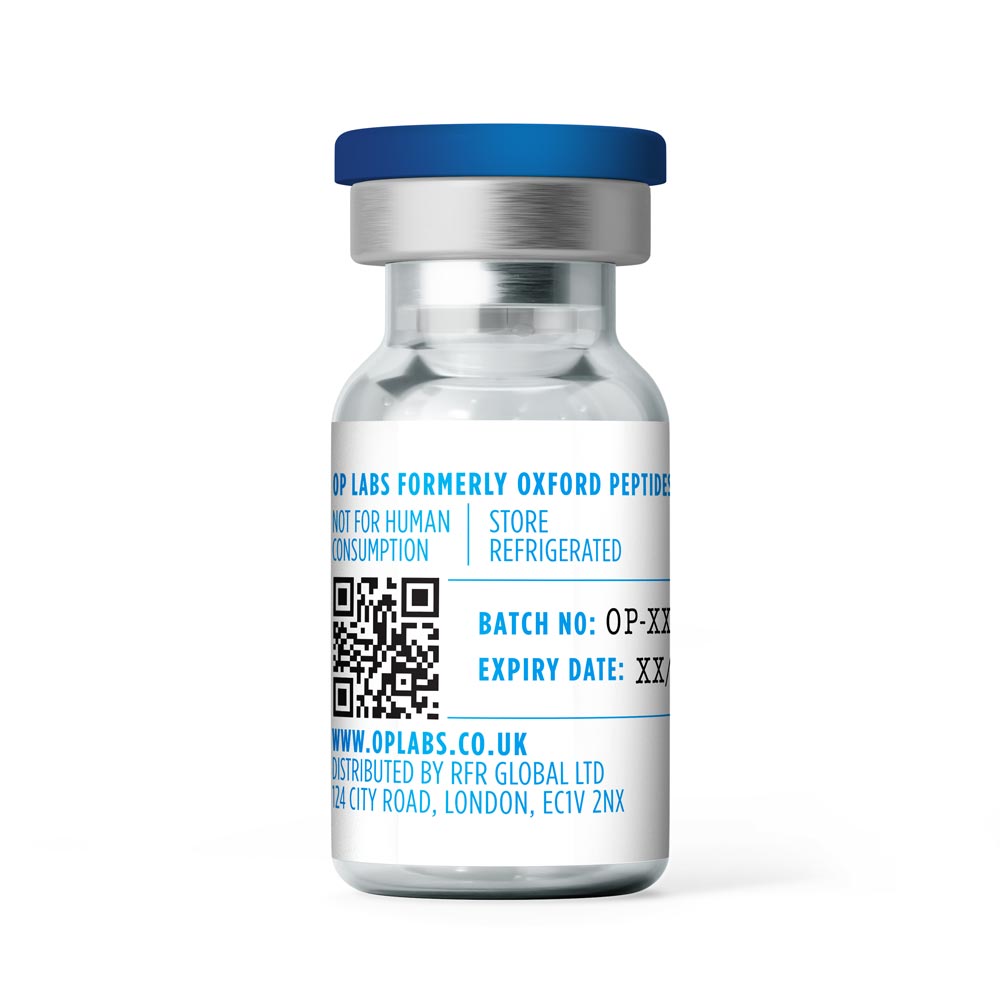




Representative specimen data. These are typical results for this product. Actual results are batch-specific and are printed on the certificate for the batch number on your vial. Research use only.
| Parameter | Result |
|---|---|
| Product name | Testagen |
| CAS number | 1026993-38-3 |
| Molecular formula | C17H29N5O9 |
| Molecular weight | 447.44 g/mol |
| Appearance | White to off-white powder |
| Test method | RP-HPLC (C18), UV detection at 220 nm |
| Purity (HPLC) | 98.81% (specification ≥ 98.0%) |
| Mass-spec identity | ESI-MS (positive): [M+H]+ 448.4, confirming 447.44 g/mol |
| Water content | 7.8% (Karl Fischer, specification ≤ 10.0%) |
| Analysis date | Representative specimen — the analysis date is printed on each batch certificate |
- OP Labs formerly Oxford Peptides
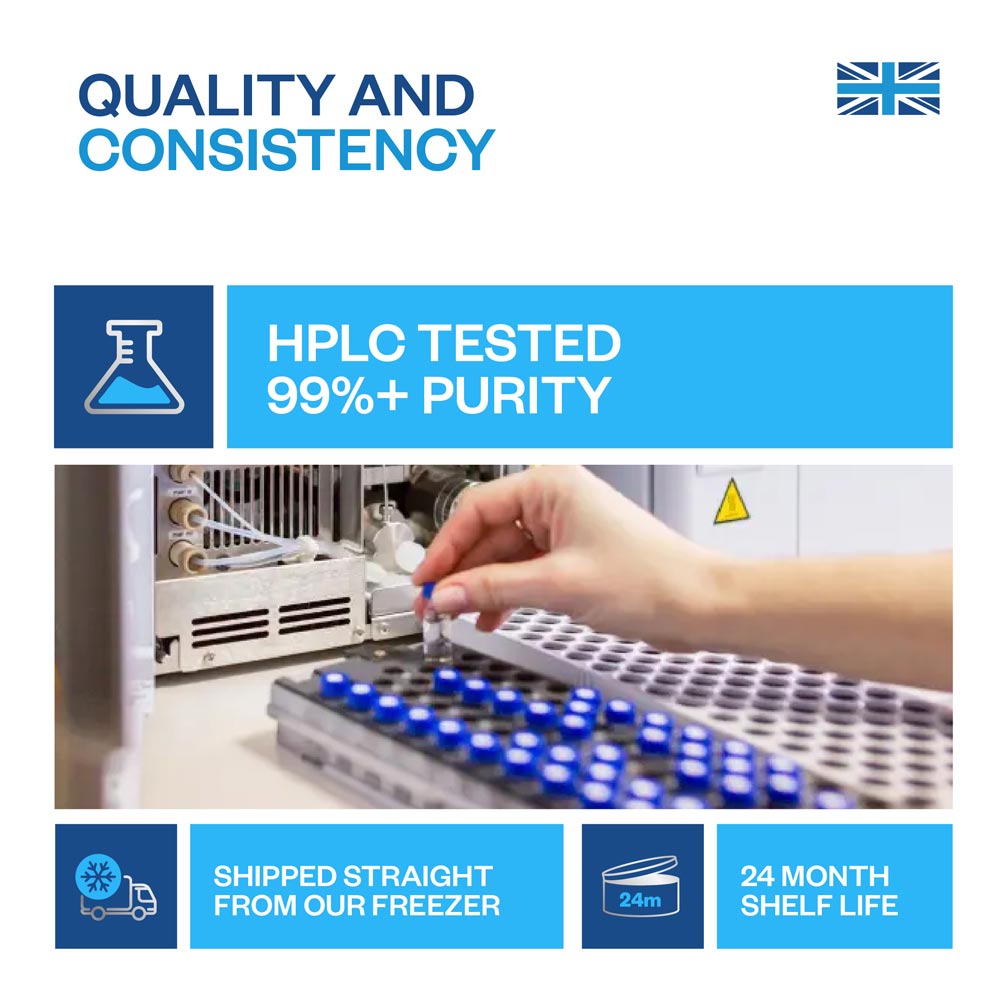
- Batch HPLC tested at 98.5%+ purity
- Store frozen long term or in fridge when ready to be used
- Sold for research purposes only
- Contact us for Wholesale Orders
Search our database for full COA analytics here.
Testagen
Synonyms / Designations: Testagen; KEDG; Lys-Glu-Asp-Gly; testis peptide bioregulator (Khavinson family)
Amino Acid Sequence: Lys-Glu-Asp-Gly (KEDG)
CAS Number: N/A
Molecular Formula: C17H29N5O9
Molecular Weight: 447.44 g/mol
Purity: ≥ 99 % (HPLC)
Appearance: White to off-white lyophilised powder
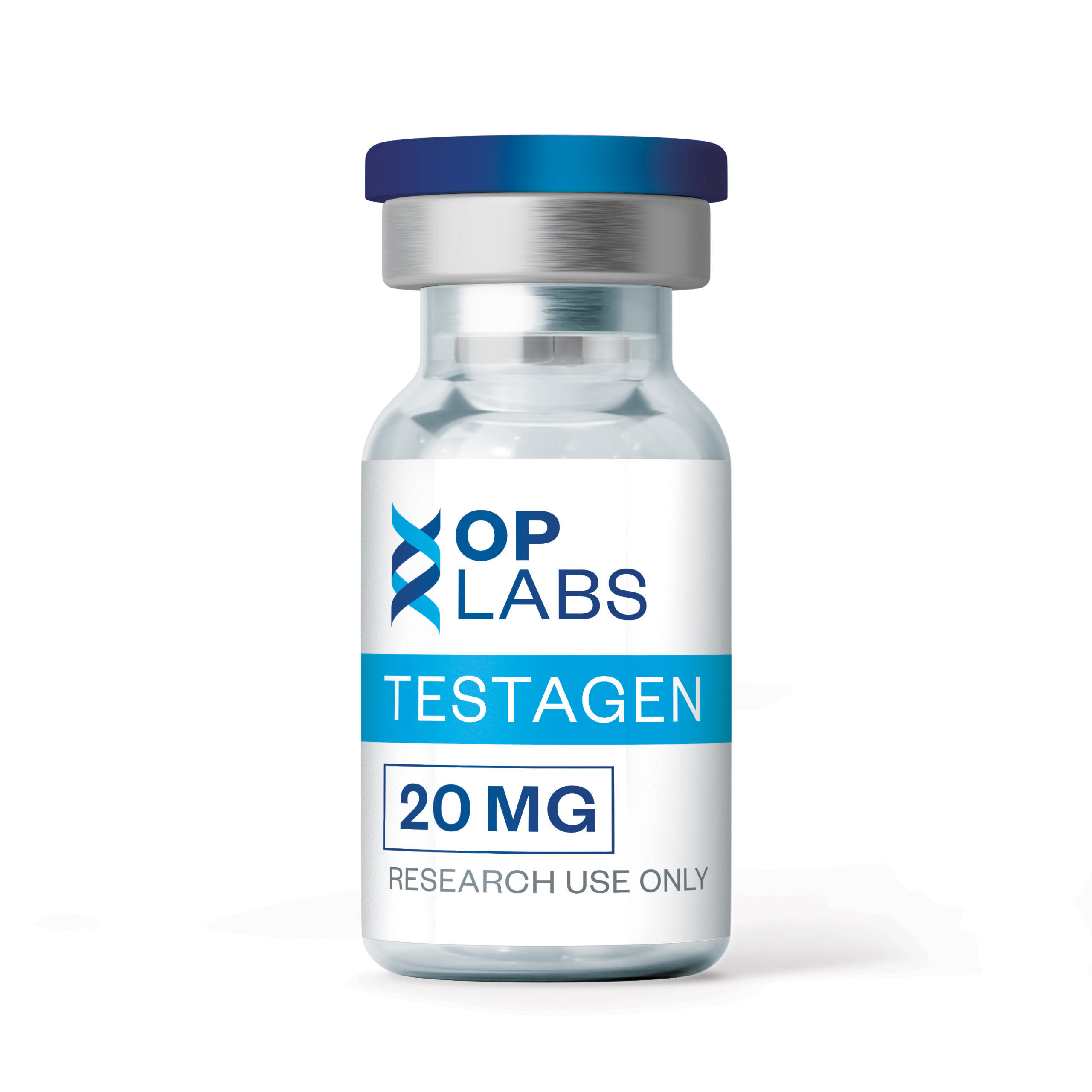
Pack Size: 20 mg (total)
Storage: Desiccated, protected from light, stored at –20 °C or below
Solubility: Soluble in water and buffered aqueous solutions
Description & Mechanism
Testagen (KEDG) is studied in vitro as a testis-directed short-peptide probe. Within the Khavinson framework it is proposed to act at the chromatin/transcriptional level to modulate expression of genes associated with testicular (Leydig/Sertoli) cell function in experimental systems.
It is used as a tool to examine peptide-driven regulation of proliferation and steroidogenesis-associated gene expression in organotypic cultures and rodent models, and as a comparator in tissue-specificity panels. Observed effects depend on concentration, model system and exposure conditions; no physiological outcome is implied.
Applications in Research
- In-vitro study of testicular cell gene-expression and proliferation markers
- Preclinical rodent models of age-related reproductive-tissue change
- Tissue-specificity comparison across Khavinson bioregulators
- Materials-science note: KEDG has also been characterised as a copper corrosion inhibitor in saline environments
Specifications Summary
| Parameter | Typical Value / Range |
|---|---|
| Purity (HPLC) | ≥ 99 % |
| Appearance | White to off-white lyophilised powder |
| Molecular Weight | 447.44 g/mol |
| Peptide Type | Synthetic tetrapeptide bioregulator (Khavinson cytogen family; testis) |
| Solubility | Water, buffered aqueous solutions |
| Storage | –20 °C, desiccated, dark |
| Pack Size | 20 mg (total) |
Handling, Reconstitution & Stability
- Weigh under dry conditions; peptide is hygroscopic
- Reconstitute in sterile water or appropriate buffered aqueous solution depending on assay requirements
- Avoid vigorous agitation during dissolution
- Filter sterilize if required (e.g. 0.22 µm) prior to use
- Aliquot and store reconstituted solutions at –20 °C or below to minimise degradation
- Avoid repeated freeze–thaw cycles
Precautions & Notes
- Experimental behaviour is dependent on concentration, model system and exposure conditions
- Avoid any performance / hormonal interpretation; appropriate experimental controls are recommended
- Prolonged exposure to light, elevated temperature or aqueous environments may reduce stability
- Intended strictly for laboratory research use; not for human or veterinary application
References
Khavinson VKh, Popovich IG, et al. Peptide Regulation of Gene Expression: A Systematic Review. Molecules. 2021;26(22):7053.
https://www.mdpi.com/1420-3049/26/22/7053
Khavinson VKh. Peptides and ageing. Neuro Endocrinol Lett. 2002;23(Suppl 3):11-144.
https://pubmed.ncbi.nlm.nih.gov/12374906/
The inhibitory effect and adsorption properties of Testagen peptide on copper surfaces in saline environments. Molecules 2024. (PMC12348504)
https://pmc.ncbi.nlm.nih.gov/articles/PMC12348504/
Keywords: Testagen, KEDG, testis peptide bioregulator, synthetic tetrapeptide