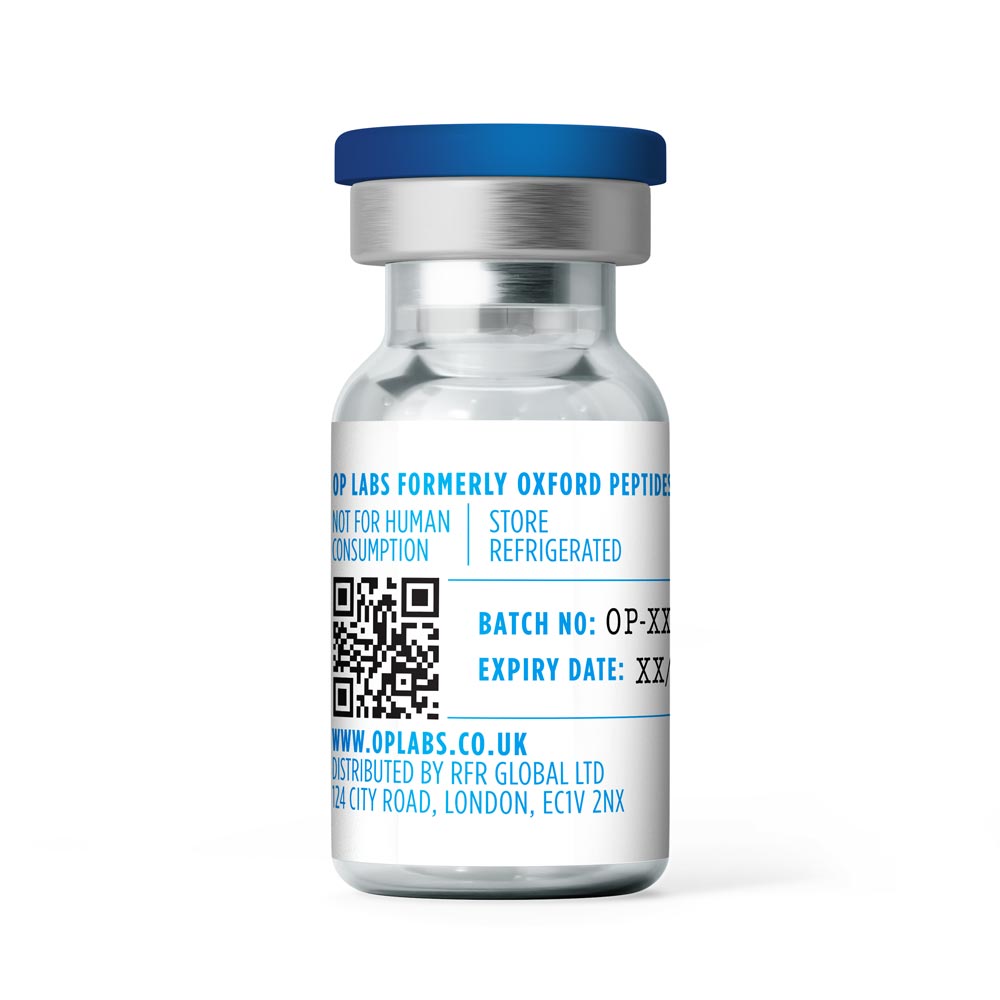
- OP Labs formerly Oxford Peptides
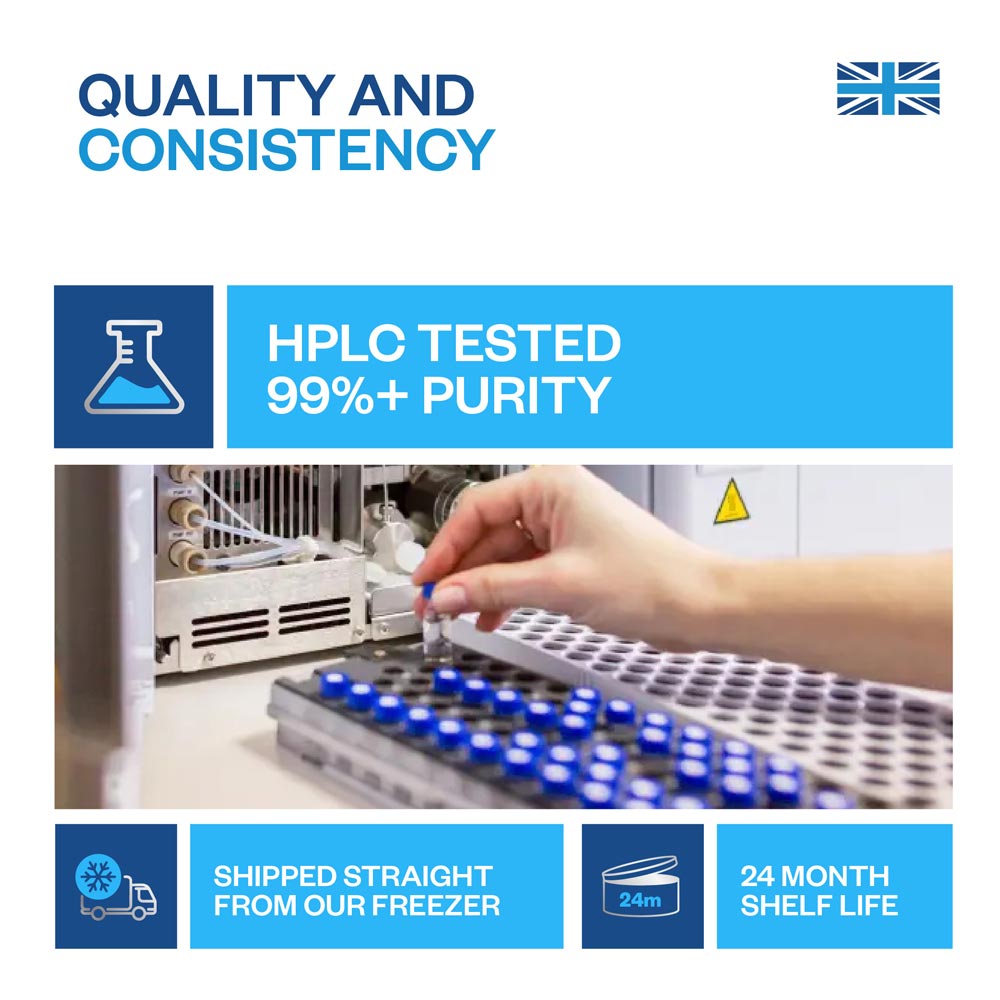
- Batch HPLC tested at ≥ 99% purity
- Storage: –20 °C long term; 2–8 °C short term
- Sold for research purposes only
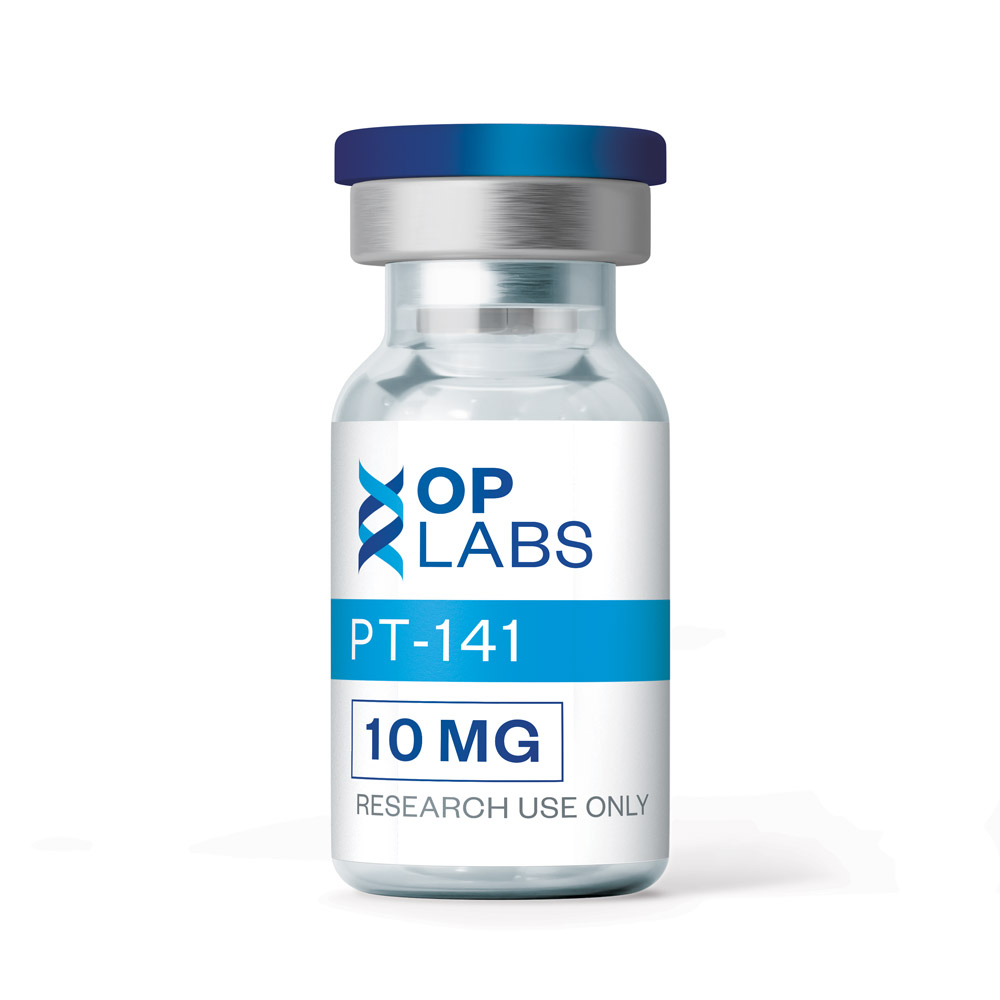
PT-141
Synonyms / Designations: PT-141
CAS Number: 189691-06-3
Molecular Formula: C50H68N14O10
Molecular Weight: ~1025.18 g/mol
Peptide Length: 7 amino acids (cyclic peptide)
Peptide Type: Synthetic melanocortin receptor agonist
Purity: ≥ 99% (HPLC, typical)
Appearance: White to off-white lyophilised powder
Pack Size: 10 mg (typical)
Storage: Desiccated, protected from light, stored at –20 °C or below
Solubility: Soluble in water and buffered aqueous solutions
Description & Mechanism
PT-141 is a synthetic cyclic heptapeptide derived from melanocortin peptides and developed for experimental investigation of melanocortin receptor–mediated signalling pathways.
In biochemical and cellular research systems, PT-141 interacts primarily with melanocortin receptors (MC1R, MC3R, MC4R), initiating intracellular signalling cascades associated with cAMP production and downstream transcriptional regulation. Experimental studies investigate receptor binding affinity, signalling bias, and comparative behaviour relative to other melanocortin analogues. Observed molecular responses depend on concentration, exposure duration, and experimental model.
Applications in Research
- As a molecular probe for studying melanocortin receptor signalling
- Investigation of GPCR-mediated intracellular signalling pathways
- In vitro studies examining receptor selectivity and peptide stability
- Use as a reference compound in neuroendocrine and peptide signalling research
Specifications Summary
Purity (HPLC): ≥ 99%
Appearance: White to off-white lyophilised powder
Molecular Weight: ~1025.18 g/mol
Peptide Type: Synthetic melanocortin analogue
Solubility: Water, buffered aqueous solutions
Storage: –20 °C, desiccated, protected from light
Pack Size: 10 mg
Precautions & Notes
- Experimental behaviour is influenced by receptor expression, peptide concentration, and exposure duration
- Buffer composition, pH, and ionic strength may affect peptide stability
- Appropriate controls are recommended to distinguish receptor-specific effects
- Intended strictly for laboratory research use
References
Cone R.D. Studies on the physiological functions of the melanocortin system. Endocrine Reviews, 2006.
https://pubmed.ncbi.nlm.nih.gov/17077189/
Keywords: PT-141, Melanocortin Agonist, Synthetic Peptide, GPCR Signalling