

- OP Labs formerly Oxford Peptides
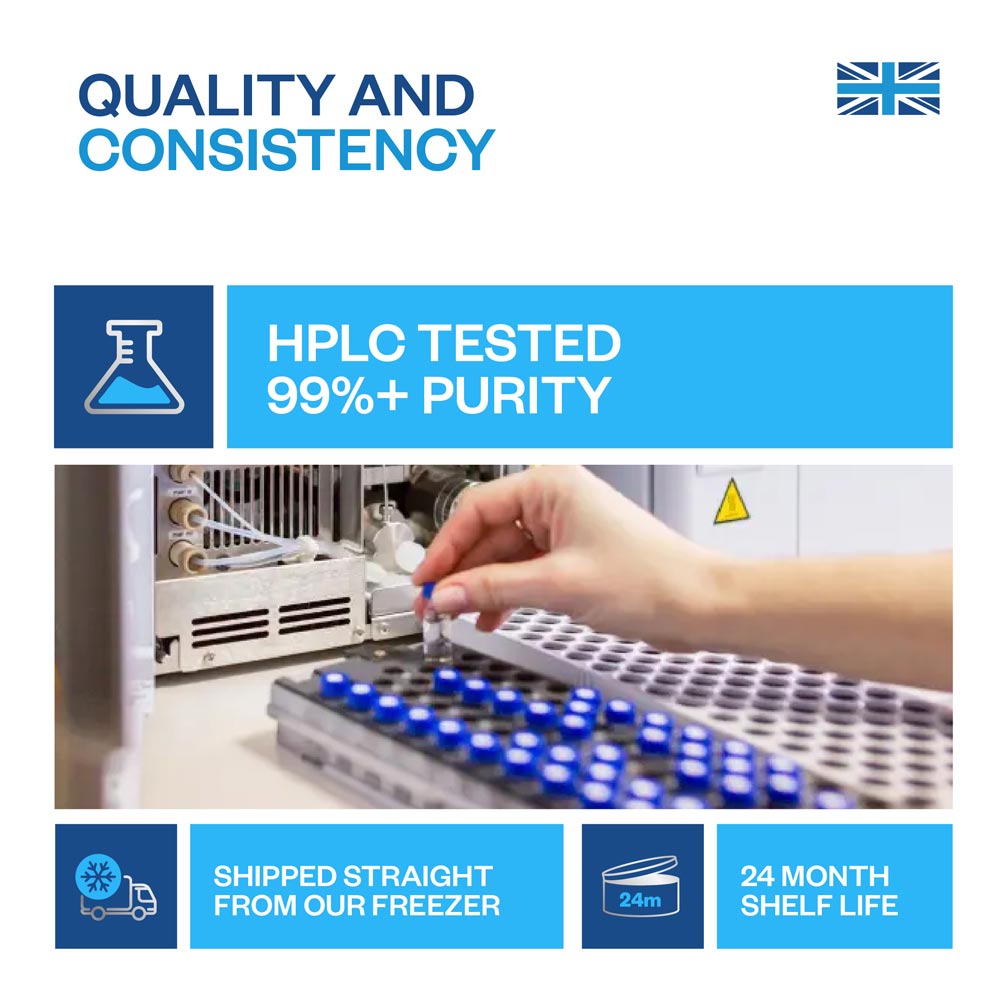
- Batch HPLC tested at 99%+ purity
- Store frozen long term or refrigerated when prepared for use
- Sold for research purposes only
- Contact us for Wholesale Orders
Download COA here: Pinealon_COA.pdf
Please note: if you have a different Batch ID, please contact us for the latest COA.
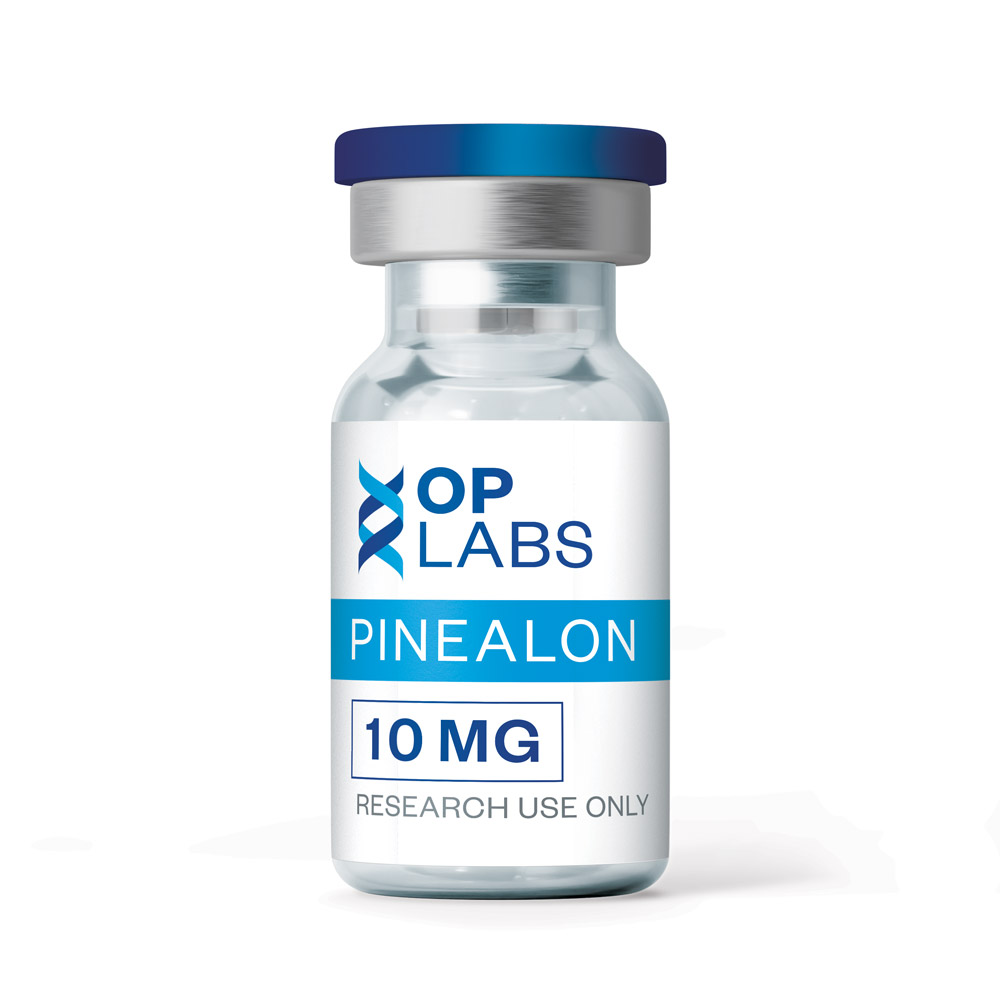
Pinealon
Synonyms / Designations: Pinealon, Glu–Asp–Arg, Pineal Tripeptide
CAS Number: 175175-23-2
Molecular Formula: C15H26N6O8
Molecular Weight: 418.407 g/mol
Peptide Classification: Synthetic tripeptide; pineal gland–derived regulatory peptide analogue
Purity: ≥ 99 % (HPLC, typical)
Appearance: White to off-white lyophilised powder
Pack Size: 10 mg (typical)
Storage: Desiccated, protected from light, stored at –20 °C
Solubility: Soluble in sterile water and buffered aqueous solutions
Description & Mechanism
Pinealon is a short synthetic tripeptide originally identified through research into pineal gland–derived regulatory peptides. It has been investigated in experimental models for its role in neuroprotection, cellular stress resistance, and regulation of gene expression associated with aging and circadian biology.
In biochemical and cellular research systems, Pinealon has been studied for its influence on neuronal survival pathways, oxidative stress modulation, and peptide–DNA interactions. Observed molecular responses are dependent on experimental design, concentration, and model system, and are used to explore peptide-mediated regulatory mechanisms rather than defined physiological outcomes.
Applications in Research
• Investigation of neuroprotective and cytoprotective peptide signalling
• Study of pineal-derived peptide regulation and circadian-associated pathways
• In vitro models examining cellular stress resistance and aging-related mechanisms
• Use as a reference compound in short regulatory peptide research
Handling, Reconstitution & Stability
• Reconstitute in sterile water or appropriate buffered aqueous solution
• Avoid vigorous agitation during dissolution
• Filter sterilize if required (e.g. 0.22 µm) prior to use
• Aliquot reconstituted solutions to avoid repeated freeze–thaw cycles
• Store reconstituted solutions at –20 °C for long-term stability
Specifications Summary
Purity: Manufactured to specification (HPLC-characterised)
Appearance: White to off-white lyophilised powder
Peptide Type: Synthetic pineal regulatory tripeptide
Molecular Weight: 418.407 g/mol
Solubility: Water, buffered aqueous solutions
Storage: –20 °C, desiccated, protected from light
Pack Size: 10 mg
Precautions & Notes
• Experimental behaviour of Pinealon is influenced by concentration, exposure duration, and model system
• Short regulatory peptides may exhibit rapid degradation in some in vitro systems
• Buffer composition and pH may affect peptide stability
• Appropriate controls are recommended for mechanistic studies
• Intended strictly for laboratory research use; not for human or veterinary application
References
Khavinson V.Kh. et al. Peptides of the pineal gland and their role in aging and neuroprotection. Neuroendocrinology Letters.
https://europepmc.org/article/med/12374906
Anisimov V.N. et al. Regulatory peptides in aging and neurodegenerative research. Bulletin of Experimental Biology and Medicine.
https://pubmed.ncbi.nlm.nih.gov/19830585/
Linkova N.S., Khavinson V.Kh. Short regulatory peptides and gene expression modulation. Advances in Gerontology.
https://pubmed.ncbi.nlm.nih.gov/19902107/
Anisimov V.N. Peptide regulation of aging: results and prospects. Bulletin of Experimental Biology and Medicine.
https://pubmed.ncbi.nlm.nih.gov/19902107/
Khavinson V.Kh. Peptides and ageing.
https://pubmed.ncbi.nlm.nih.gov/12374906/
Anisimov V.N. et al. Effect of pineal peptide preparation (epithalamin) on life span and pineal and serum melatonin levels in old rats. Annals of the New York Academy of Sciences, 1992.
https://pubmed.ncbi.nlm.nih.gov/1485734/
Khavinson V.Kh. Peptides of pineal gland and thymus prolong human life.
https://europepmc.org/article/med/14523363
Khavinson V.Kh. Aging of the pineal gland.
https://pubmed.ncbi.nlm.nih.gov/12096440/
Epitalon (pineal tetrapeptide) — molecular and biological overview.
https://pmc.ncbi.nlm.nih.gov/articles/PMC11943447/
Keywords: Pinealon, Pineal Peptide, Synthetic Tripeptide, Neuroprotective Peptide, Regulatory Peptide
Sara J. –
Fantasic service, great prices and selection
Margarita J. –
Very good quality and It helps me sleep. The delivery is fast and free. What could be better 🙂
Wendy Jane E. –
Excellent product
Antonino Carollo –
Kat –