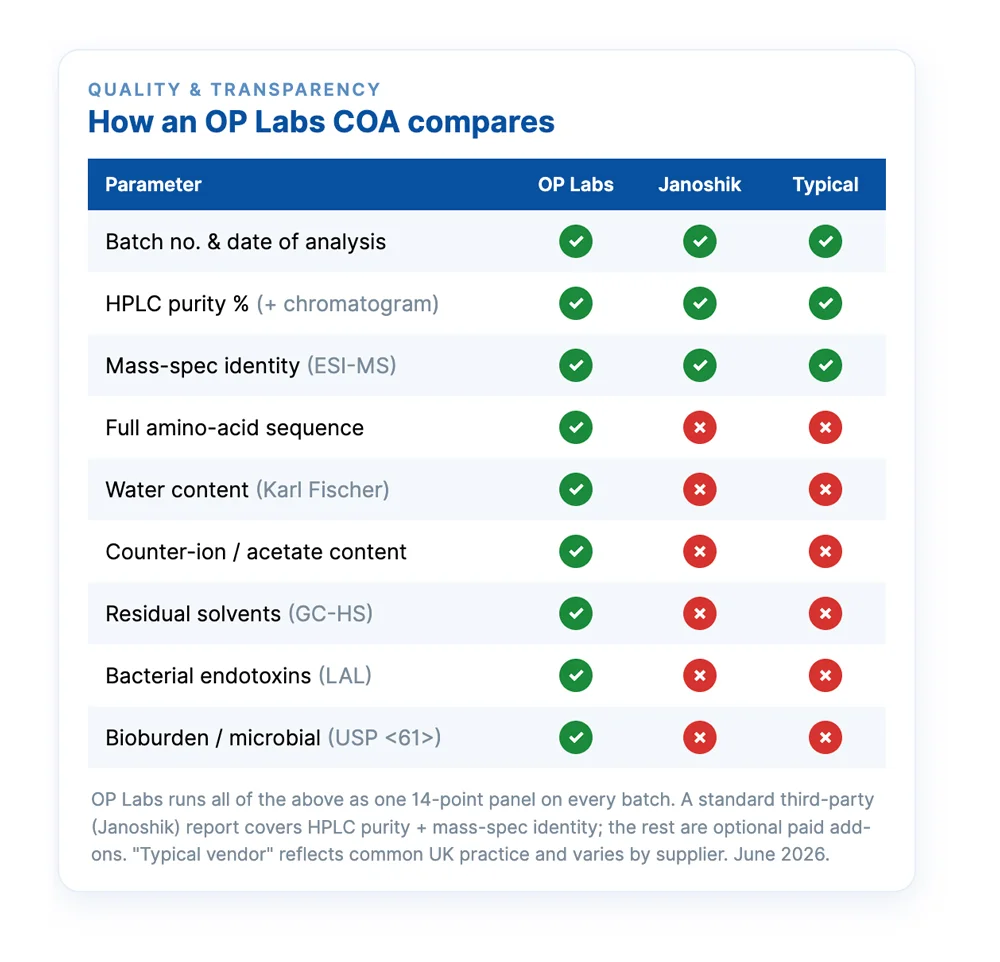


Representative specimen data. These are typical results for this product. Actual results are batch-specific and are printed on the certificate for the batch number on your vial. Research use only.
| Parameter | Result |
|---|---|
| Product name | Crystagen |
| CAS number | N/A |
| Molecular formula | C14H21N3O8 |
| Molecular weight | 359.0 g/mol |
| Appearance | White to off-white powder |
| Test method | RP-HPLC (C18), UV detection at 220 nm |
| Purity (HPLC) | 98.2% (specification ≥ 98.0%) |
| Mass-spec identity | ESI-MS (positive): [M+H]+ 360.0, confirming 359.0 g/mol |
| Water content | 7.9% (Karl Fischer, specification ≤ 10.0%) |
| Analysis date | Representative specimen — the analysis date is printed on each batch certificate |
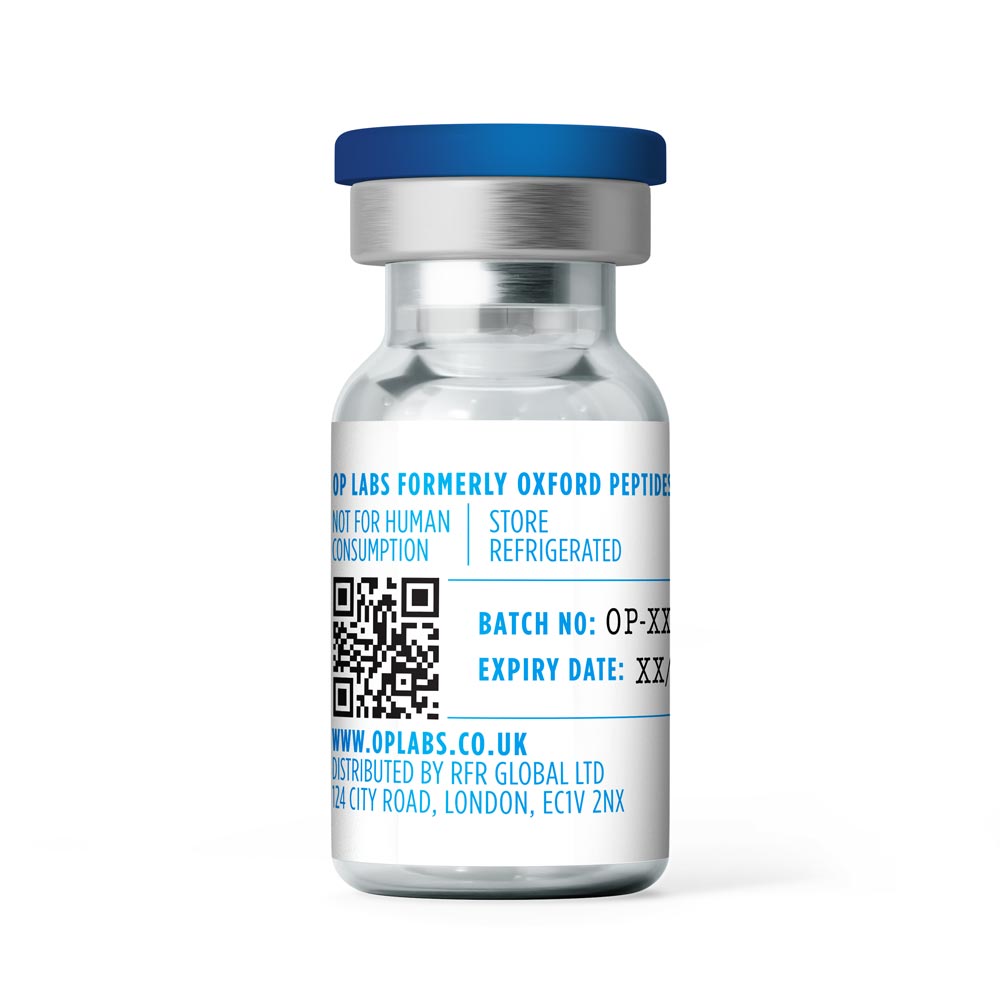
- OP Labs formerly Oxford Peptides
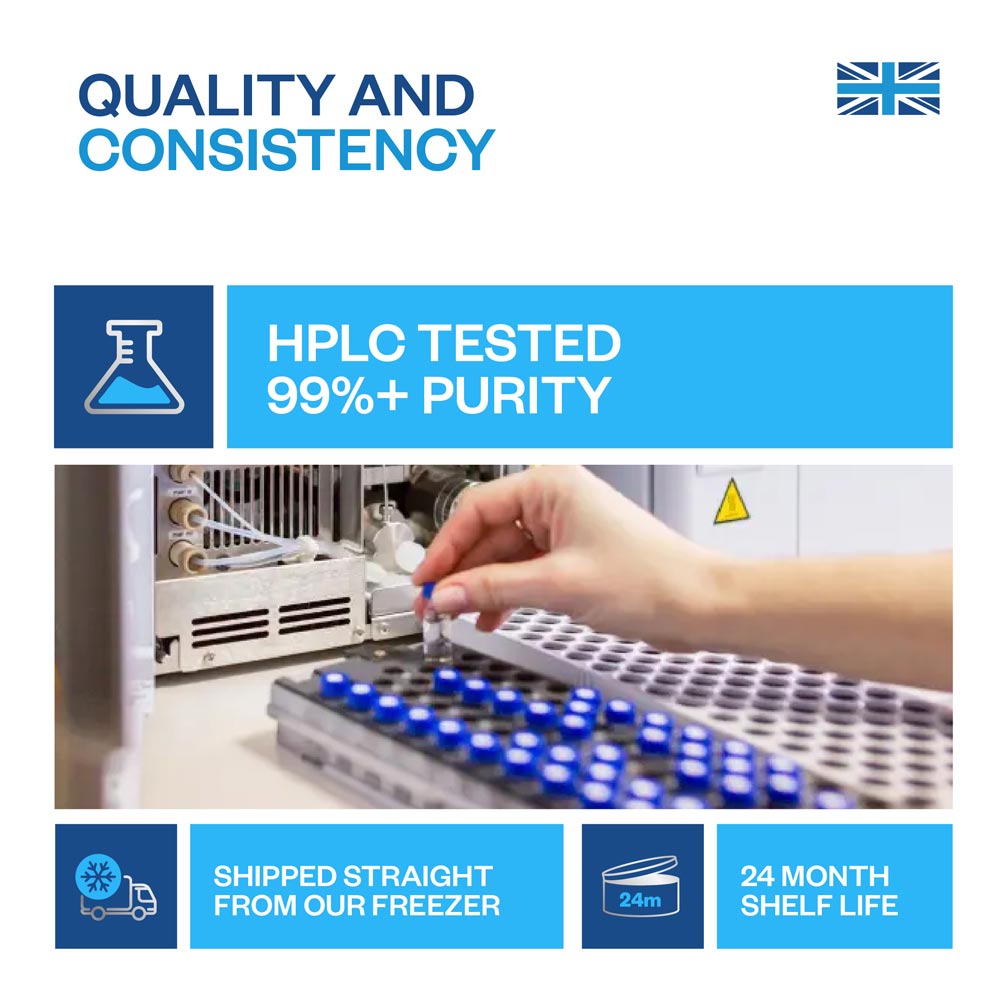
- Batch HPLC tested at 98.5%+ purity
- Store frozen long term or in fridge when ready to be used
- Sold for research purposes only
- Contact us for Wholesale Orders
Search our database for full COA analytics here.
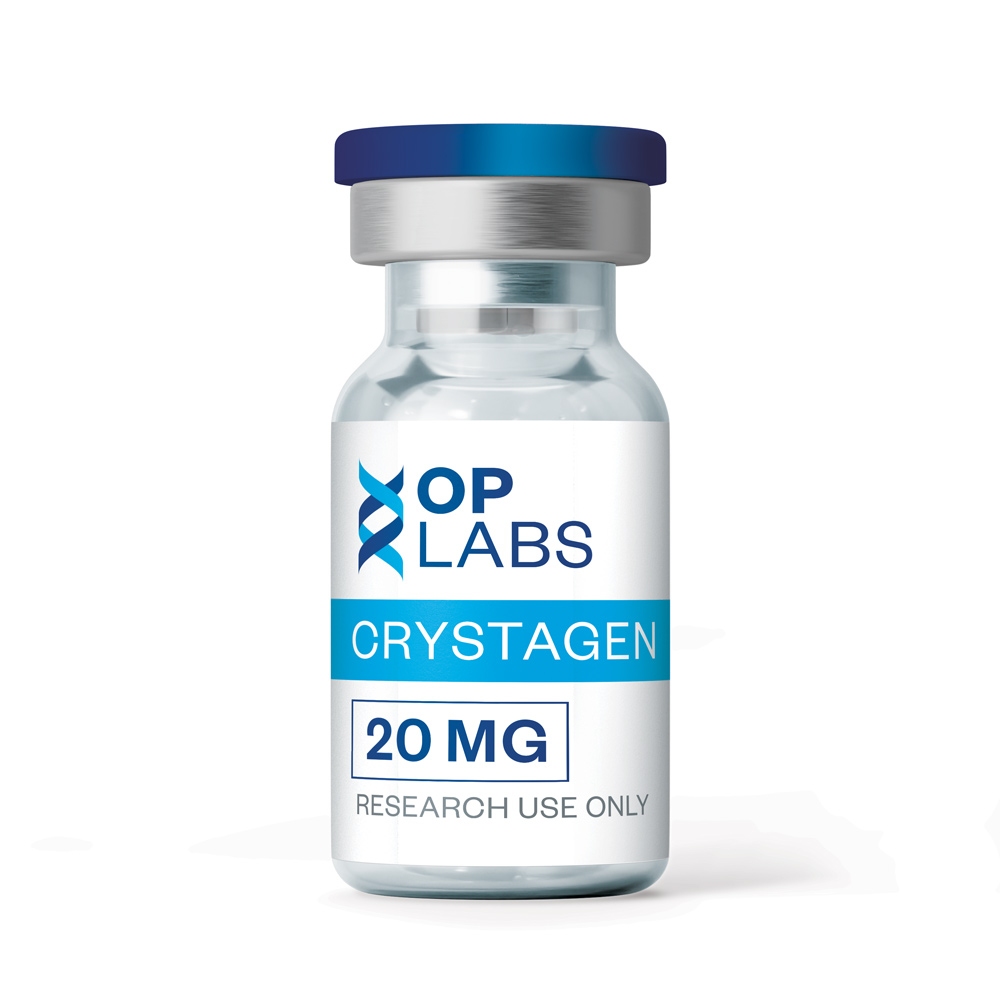
Crystagen
Synonyms / Designations: Crystagen; Kristagen; EDP; immune / thymic peptide bioregulator (a defined short-peptide component of Thymalin)
Amino Acid Sequence: Glu-Asp-Pro (EDP)
CAS Number: N/A
Molecular Formula: C14H21N3O8
Molecular Weight: 359.34 g/mol
Purity: ≥ 99 % (HPLC)
Appearance: White to off-white lyophilised powder
Pack Size: 20 mg (total)
Storage: Desiccated, protected from light, stored at –20 °C or below
Solubility: Soluble in water and buffered aqueous solutions
Description & Mechanism
Crystagen is a short synthetic tripeptide (EDP), identified as one of the bioactive short peptides within the thymic preparation Thymalin, used as a molecular probe for studying immune / lymphoid gene regulation in experimental systems. In cellular models it is studied for effects on lymphocyte proliferation and T-cell-associated markers (e.g. CD3+, CD4+ populations and the CD4+/CD8+ ratio).
Consistent with the Khavinson model, EDP is studied as a cell-penetrating peptide that may bind double-stranded DNA and/or histones to influence expression of immune-system genes. It functions in the laboratory as a research probe for short-peptide / chromatin interaction and immune gene-expression studies; observed effects depend on concentration, model system and exposure conditions.
Applications in Research
- In-vitro lymphocyte proliferation and T-cell marker assays (CD3+/CD4+, CD4+/CD8+)
- Cellular models of immune / thymic gene regulation and immunosenescence
- Studies of EDP as a defined active component of the Thymalin peptide complex
- Probe for short-peptide DNA/histone-binding studies
Specifications Summary
| Parameter | Typical Value / Range |
|---|---|
| Purity (HPLC) | ≥ 99 % |
| Appearance | White to off-white lyophilised powder |
| Molecular Weight | 359.34 g/mol |
| Peptide Type | Synthetic linear tripeptide bioregulator (Khavinson cytogen family; thymic/immune) |
| Solubility | Water, buffered aqueous solutions |
| Storage | –20 °C, desiccated, dark |
| Pack Size | 20 mg (total) |
Handling, Reconstitution & Stability
- Weigh under dry conditions; peptide is hygroscopic
- Reconstitute in sterile water or appropriate buffered aqueous solution depending on assay requirements
- Avoid vigorous agitation during dissolution
- Filter sterilize if required (e.g. 0.22 µm) prior to use
- Aliquot and store reconstituted solutions at –20 °C or below to minimise degradation
- Avoid repeated freeze–thaw cycles
Precautions & Notes
- Experimental behaviour is dependent on concentration, model system and exposure conditions
- As an immunomodulatory research peptide, appropriate experimental controls are recommended
- Prolonged exposure to light, elevated temperature or aqueous environments may reduce stability
- Intended strictly for laboratory research use; not for human or veterinary application
References
Khavinson VKh, Kuznik BI, et al. The Use of Thymalin for Immunocorrection and Molecular Aspects of Biological Activity. Biol Bull Rev. 2021. (PMC8365293)
https://pmc.ncbi.nlm.nih.gov/articles/PMC8365293/
Khavinson VKh, et al. Peptide Drug Thymalin Regulates Immune Status in Severe COVID-19 Older Patients. (PMC8654498)
https://pmc.ncbi.nlm.nih.gov/articles/PMC8654498/
Khavinson VKh, Linkova NS, et al. Short cell-penetrating peptides: a model of interactions with gene promoter sites.
https://pubmed.ncbi.nlm.nih.gov/23484211/
Khavinson VKh, Popovich IG, et al. Peptide Regulation of Gene Expression: A Systematic Review. Molecules. 2021;26(22):7053.
https://www.mdpi.com/1420-3049/26/22/7053
Keywords: Crystagen, EDP, immune peptide bioregulator, synthetic tripeptide